Research

Oil Change International publishes upwards of 20 reports and briefings every year focused on supporting the movement for a just phase-out of fossil fuels.

A Call for Reason in Warsaw: Finance Climate Action, not Fossil Fuel Subsidies

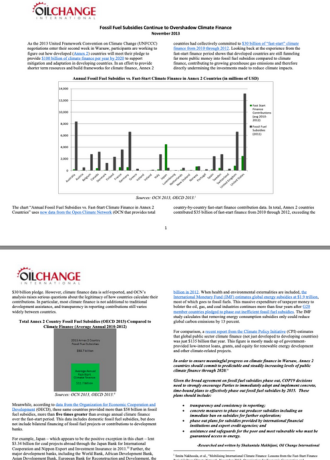
But as shown in a briefing released by Oil Change International today, while Annex 2 (developed) countries continue to debate how to honor their commitment to provide $100 billion each year by 2020 to help developing countries reduce emissions and adapt to climate impacts, these same countries are providing five times more public support for fossil fuel production and consumption than they have so far pledged in climate finance. These fossil fuel subsidies are driving the global growth in greenhouse gas emissions and therefore directly undermining investments to reduce climate impacts.
New Analysis: Fossil fuel subsidies five times greater than climate finance

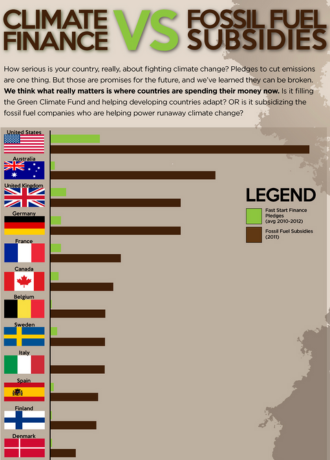
Here in Doha for the UN climate negotiations, we've just released new analysis that shows that fossil fuel subsidies in rich countries are, on average, five times greater than those same countries' pledges towards climate finance.

Report – Low Hanging Fruit: Fossil Fuel Subsidies, Climate Finance, and Sustainable Development

Our latest report finds that global fossil fuel production and consumption subsidies are at least $775 billion annually and could be $1 trillion or even more. There is an urgent need for transparency in subsidy reporting.

Unclear on the Concept: How Can the World Bank Group Lead on Climate Finance Without an Energy Strategy?

The World Bank Group is experiencing clear difficulties in synching its core lending and its energy strategy with climate goals, and the institution has taken steps that can easily be viewed as creating a conflict of interest. Given these difficulties and contradictions, the institution should focus on cleaning up its own act before making further forays into climate finance initiatives.