
More on Ethanol: The Answer to Oil or a Pipe Dream?
 Good article in today’s Independent on ethanol, which answers the question is ethanol the answer to reducing our CO2 emissions?
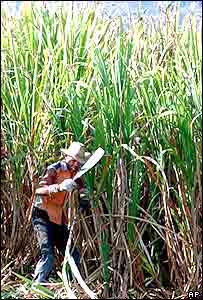
Mike McCarthy, the paper’s environment editor, replies “It would certainly seem so at first sight, not least because the fastest growing greenhouse gas emissions are those from the transport sector, and it is in road transport that biofuels have an immediate application. The best known biofuel, ethanol, which is made from sugar cane or sugar beet, is already being widely used as a motor vehicle fuel in Brazil, which is the world’s biggest producer, making 16 billion litres of the stuff annually”.
McCarthy notes that “biofuels are taking off world-wide. The US has recently woken up to their attractions and is surging ahead with production; by 2010 its output will rival Brazil’s. But this is not just for environmental reasons: anything that reduces American reliance on oil imports is welcome, and furthermore biofuels provide a big new market for American farmers. The European Union is also boosting ethanol production. Indeed, some of the enormous quantity of surplus wine that Italian and French growers are producing – the so-called “wine lake” which Brussels is desperate to shrink – is currently being distilled into ethanol at a cost of half a billion euros a year”.
He also lists the drawbacks: “The initial enthusiasm of environmentalists for ethanol and other biofuels has been tempered as they have thought through the implications of using them on a large scale, and groups such as Greenpeace, while still supportive in principle, are starting to have major reservations. The key point is this: a certain amount of biofuels can be produced to make a difference at the margin of CO2 emissions, without major changes in land use, but to make a real, substantive difference to emissions, vast amounts of new cropland would be necessary.
The biofuel market might become so big that this demand would be a powerful driver of rainforest destruction. For example, the production of palm oil, which is increasingly important in biofuels, has been one of the biggest causes of the devastation of the rainforest in Borneo and Sumatra. Are we going to reduce CO2 emissions by wrecking somebody else’s rainforest? Friends of the Earth says that is hardly a just, let alone a sustainable solution”.
So the final question is whether ethanol is a green alternative to fossil fuels?
McCarthy writes: “Environmentalists reject the idea that biofuels could be a ‘drop-in’ solution to go into the tank of your gas-guzzling 4×4 and suddenly turn it green. They might contribute to a truly green solution in cars that were hyper-fuel-efficient, says Greenpeace, but by themselves they do not do it: it is the demand for fuel which has to be cut back in the first place. The planet will not be saved by putting a different fuel, however carbon-neutral it might be, into more and more, bigger and bigger cars”.
So bad luck boys -you can’t just fill your SUV with ethanol and drive with a clean conscience. The SUV will have to go.. but don’t replace it with a Hummer.