
Fossil Fuel Transition Roadmaps: Country Announcements and Reactions
On top of the already evident climate case, the economic and security case for countries to switch to renewable energy and electrify their economy has never been clearer and more urgent as we face the worst in history energy crisis. This is a wake up call for countries: if they do not plan their transition away from fossil fuel dependence now, they risk facing social, economic, and political chaos alongside climate breakdown.
Latest statements and analysis from Oil Change International
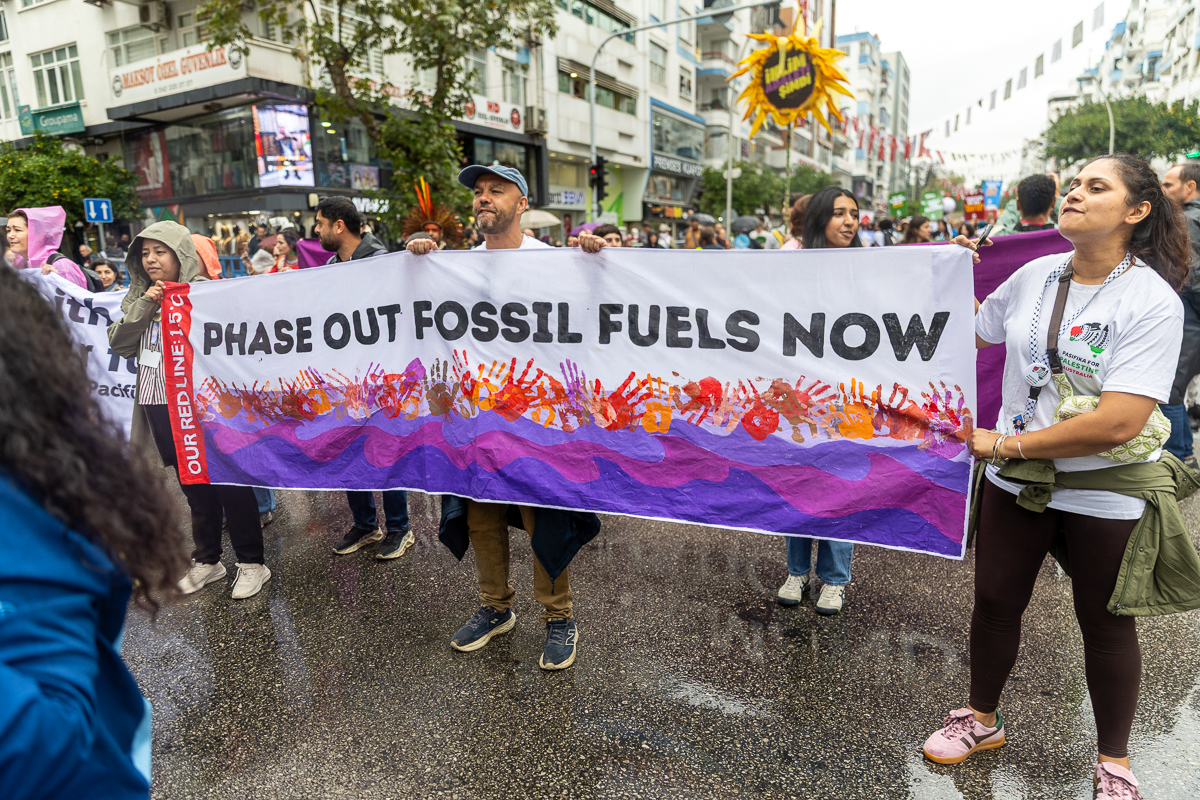
Governments have committed to transitioning away from fossil fuels. Now they need to plan how they will deliver.
As governments face growing pressure to deliver on their commitment to transition away from fossil fuels, countries are beginning to put forward national roadmaps. But not all roadmaps are created equal. Some offer pathways to phase out fossil fuels, while others largely repackage existing commitments, fail to set clear timelines, or leave the door open to further oil and gas expansion.
Oil Change International is tracking these announcements, assessing their credibility, and calls on wealthy fossil fuel producers to lead with concrete action and public finance.
Latest announcements
November 12, 2026
Brazil
COP30 Presidency publishes global fossil fuel transition roadmap
Brazil’s COP30 Presidency has published a global roadmap for transitioning away from fossil fuels, a valuable toolbox for countries to follow when mapping out their own national roadmaps, and adding momentum to growing calls for governments to turn the COP28 commitment into concrete national plans.
National roadmap announcement and OCI reaction to be added when confirmed.
Finland
Finland’s fossil fuel transition roadmap
Finland has released a fossil fuel transition roadmap, joining a small but growing group of countries taking steps to outline their transition. However, the roadmap largely restates existing government policies, with no new phaseout dates for oil or gas consumption and no new international finance commitments.
Expected during COP31: Ireland, Switzerland, Nigeria
Nigeria’s fossil fuel transition roadmap
Nigeria’s anticipated roadmap would mark an important development as a Global South fossil fuel producing country outlines its approach to transitioning away from fossil fuels. Its announcement could help demonstrate why producer countries need credible, equitable pathways that address economic dependence on fossil fuels, identify the sectors they want to develop, establish how the transition will be financed, and address the systemic barriers that currently lock countries into fossil fuel dependence.
Further details and OCI reaction forthcoming.
Other national roadmaps and plans
Several European countries have also published fossil fuel transition roadmaps or related national plans. While these represent steps toward planning the transition, OCI’s analysis finds significant gaps between existing policies and the new action needed to deliver a fair, funded fossil fuel phaseout.
- France: Sets out existing fossil fuel phaseout dates, including ending production by 2040, but offers almost no new commitments, no new international finance, and no explicit just transition measures.
- Germany: Identifies 2045 as the deadline for transitioning away from fossil fuel use, but offers no commitment to end new oil and gas licensing, no new international finance, and no gas-specific phaseout date.
- Netherlands: Reaffirms its commitment to end coal power by 2030, but provides no new fossil fuel phaseout timeline and explicitly supports scaling up gas extraction from North Sea fields.
- United Kingdom: Its clean electrification plan outlines measures to shift energy demand away from fossil fuels, but does not set fossil fuel phaseout dates. The UK has also continued approving new oil and gas development.
What makes a credible roadmap?
Roadmaps must translate commitments into action through binding timelines, an end to fossil fuel expansion, a just transition for workers and communities, and adequate public finance.
Credible roadmaps should:
- Set a long-term vision for the country’s energy and economy with clear targets and trajectories;
- Seek to grow non-fossil fuel sectors through industrial policy and planning;
- Unlock fiscal space for the transition; and
- Identify and tackle systemic barriers to transition, including by championing international economic and financial reforms, and supporting international cooperation for a just and equitable phase out. In the near term, a number of policies can be implemented domestically, or supported at the international level, to kickstart this transition journey.
On top of the already evident climate case, the economic and security case for countries to switch to renewable energy and electrify their economy has never been clearer and more urgent as we face the worst in history energy crisis. This is a wake up call for fossil fuel producing countries: if they do not plan their transition away from fossil fuel dependence now, they risk facing social, economic, and political chaos alongside climate breakdown.
Wealthy fossil fuel producers have the greatest responsibility and capacity to move first and fastest. Roadmaps that fail to address ongoing fossil fuel expansion, or that offer no new action or finance, risk becoming another exercise in repackaging climate promises rather than delivering them.
Media inquiries
We’ll be tracking as countries announce their plans to transition away from fossil fuels. This page will be updated with the latest announcements and reactions.
Contact Oil Change International’s communications team for interviews, country-specific reactions, and expert analysis.