
Skip to content
Oil Change International | Data Driven, People Powered. Oil Change International | Data Driven, People Powered.
  • About
    • Our Work
    • Values
    • Team
    • Jobs at OCI
    • Ways to Give
  • Program Areas
    • Africa
    • Asia
    • North Sea
    • United States
    • Global Industry
    • Global Public Finance
    • Global Policy
  • Latest
    • Blog
    • Podcast
    • Press Releases
    • Shell Shocked Land
  • Press Releases
  • Publications
Donate
  • Get Updates
    • Share on Bluesky Share on Bluesky Bluesky (opens in a new window)
    • Share on Twitter Share on Twitter Twitter (opens in a new window)
    • Share on Instagram Share on Instagram Instagram (opens in a new window)
    • Share on LinkedIn Share on LinkedIn LinkedIn (opens in a new window)
    • Share on Facebook Share on Facebook Facebook (opens in a new window)
Donate
  • About
    • Our Work
    • Values
    • Team
    • Jobs at OCI
    • Ways to Give
  • Program Areas
    • Africa
    • Asia
    • North Sea
    • United States
    • Global Industry
    • Global Public Finance
    • Global Policy
  • Latest
    • Blog
    • Podcast
    • Press Releases
    • Shell Shocked Land
  • Press Releases
  • Publications
    • Get Updates
    • Share on Bluesky Bluesky
    • Share on Twitter Twitter
    • Share on Instagram Instagram
    • Share on LinkedIn LinkedIn
    • Share on Facebook Facebook
Go to OCI Homepage
Current Affairs
Published: January 09, 2008

Grass biofuels “Cut CO2 by 94%”
  • Latest from OCI
  • Blogs listing
  • Grass biofuels “Cut CO2 by 94%”
    • Biofuels Current Affairs emissions LNG Paris taxes
Andy Rowell

When not blogging for OCI, Andy is a freelance writer and journalist specializing in environmental issues.

[email protected]

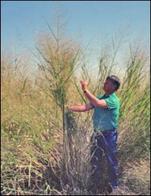
Producing biofuels from a fast-growing grass delivers vast savings of carbon dioxide emissions compared with petrol, a large-scale study has suggested.
A team of US researchers also found that switchgrass-derived ethanol produced 540% more energy than was required to manufacture the fuel. They also calculated that the production and consumption of switchgrass-derived ethanol cut CO2 emissions by about 94% when compared with an equivalent volume of petrol.
One acre (0.4 hectares) of the grassland could, on average, deliver 320 gallons of bioethanol, they added. Their paper appears in the Proceedings of the National Academy of Sciences.
Co-author Ken Vogel of the US Department of Agriculture’s (USDA) Agriculture Research Service, based at the University of Nebraska, Lincoln, said: “We had on-farm trials, so we had all the data from the farmers on all the inputs needed to produce the crops. We were able to take this information and put it into this model and able to come up with a very real-world estimate.”

Oil Change International | Data Driven, People Powered.
Donate Get Updates
Back to the top
  • Keep in touch

  • Oil Change International
    714 G St. SE, #202
    Washington, DC 20003
    United States

    +1.202.518.9029

    [email protected]

    • Share on Bluesky Bluesky (opens in a new window)
    • Share on Twitter Twitter (opens in a new window)
    • Share on Instagram Instagram (opens in a new window)
    • Share on LinkedIn LinkedIn (opens in a new window)
    • Share on Facebook Facebook (opens in a new window)
  • Quick links

  • About OCI
  • Our Values
  • Jobs at OCI
  • Ways to Give
  • Media Centre

  • Publications
  • Press
  • Associated websites

  • Big Oil Reality Check
  • Energy Finance Database
  • Permian Climate Bomb
  • Site map
  • Privacy policy

Copyright © 2025 Oil Change International. Web design by Fat Beehive