
Advancing a Fair and Funded Transition Away from Fossil Fuels at COP30
The report recommends that governments lead the fossil fuel phase-out to ensure it is rooted in justice and equity.
Oil Change International publishes upwards of 20 reports and briefings every year focused on supporting the movement for a just phase-out of fossil fuels.
The report recommends that governments lead the fossil fuel phase-out to ensure it is rooted in justice and equity.
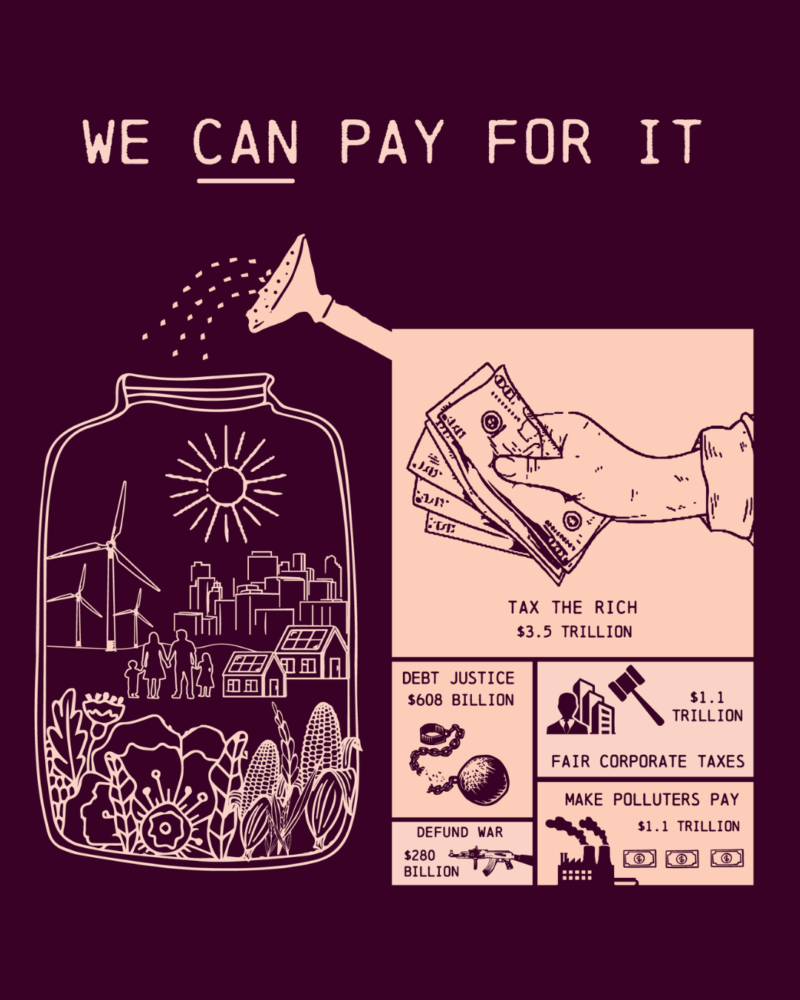
Rich country leaders can unlock $6.6 trillion (USD) per year in public funding to pay their fair share for climate action at home and abroad. By ending fossil fuel handouts, making big polluters pay, and taxing the super rich, governments can raise the public money needed for a global just transition to renewables and other urgent needs from healthcare to housing.
Last year at COP28, governments committed to transition away from fossil fuels. The next key step to make good on this landmark energy agreement is rich countries agreeing to a new climate finance goal of at least $1 trillion annually to make this possible. This will allow countries to deliver national climate plans (NDCs) due in 2025 that phase out fossil fuels.
Last year at COP28, governments committed to transition away from fossil fuels. The next key step to make good on this landmark energy agreement is rich countries agreeing to a new climate finance goal of at least $1 trillion annually to make this possible. This will allow countries to deliver national climate plans (NDCs) due in 2025 that phase out fossil fuels. Rich countries can mobilize well over $5 trillion a year for climate action at home and abroad by ending fossil fuel handouts, making big polluters pay, and changing unfair global financial rules.
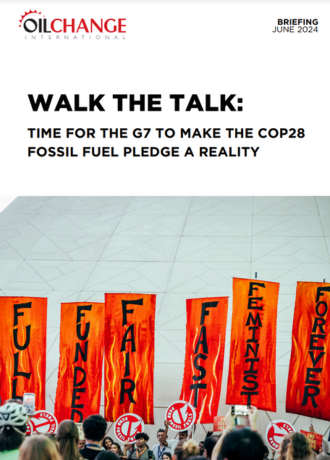
This briefing from Oil Change International shows that G7 countries, which have both the capacity and the responsibility to be leaders in phasing out fossil fuels, are not walking the walk – at home or abroad: some G7 countries are massively expanding fossil fuel production at home, while others are investing in more fossil fuel infrastructure abroad. Both are catastrophic failures of leadership, which the G7 has a responsibility to correct.
Oil and gas companies, and some governments, are more interested in looking like they're acting on climate change than actually acting. They spend billions on smoke and mirrors such as “carbon capture and storage,” “certified gas,” ammonia co-firing, and hydrogen when in reality, they are trying to build escape hatches to continue their dirty business as usual.
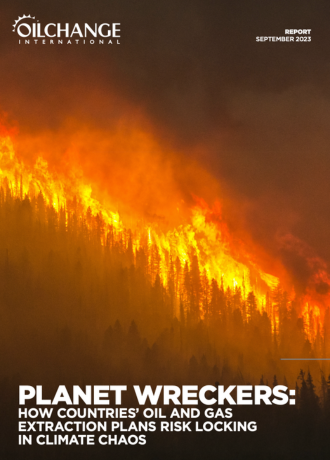
Oil Change International research shows that only 20 countries, led overwhelmingly by the United States, are responsible for nearly 90 percent of the carbon-dioxide (CO2) pollution threatened by new oil and gas fields and fracking wells planned between 2023 and 2050. If this oil and gas expansion is allowed to proceed, it would lock in climate chaos and an unlivable future.
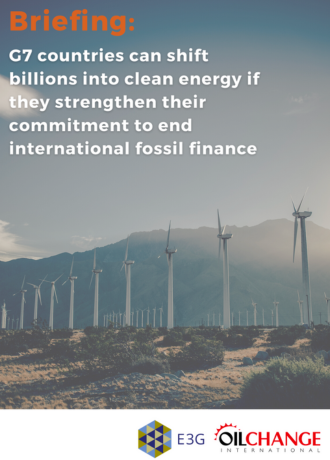
The new briefing provides preliminary energy finance data for 2022 and shows that not only investments in new fossil fuel infrastructure are incompatible with meeting climate goals, but also that they are not needed for energy security and development goals.
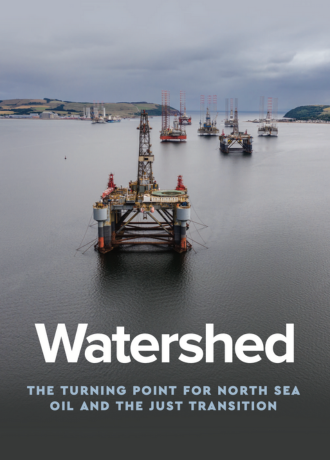
Released ahead of crucial UN climate talks in Glasgow, Scotland, this report examines why UK and Scottish Government policy to maximise oil and gas extraction from the North Sea is incompatible with stated commitments to the Paris Agreement goal of limiting dangerous warming to 1.5 degrees Celsius (ºC).
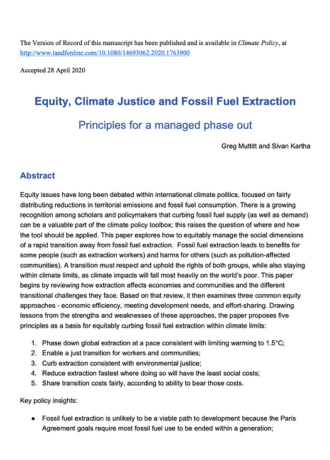
As COVID-19 and other factors force an unmanaged decline of oil and gas, a new peer-reviewed study outlines how policymakers can plan for a better future, with an equitable phase-out of fossil fuels.