Research

Oil Change International publishes upwards of 20 reports and briefings every year focused on supporting the movement for a just phase-out of fossil fuels.

At a Crossroads: Assessing G20 and MDB international energy finance ahead of stop funding fossils pledge deadline

This report looks at G20 country and MDB traceable international public finance for fossil fuels from 2019-2021 and finds they are still backing at least USD 55 billion per year in oil, gas, and coal projects. This is a 35% drop compared to previous years (2016-2018), but still, almost twice the support provided for clean energy, which averaged only $29 billion per year.
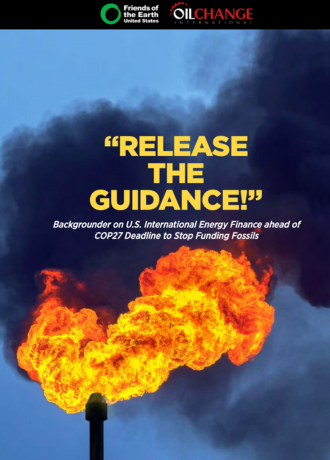
Release the Guidance: Backgrounder on U.S. International Energy Finance ahead of COP27 Deadline

From 2010-2021, the United States' trade and development finance institutions provided nearly five times as much support to fossil fuels as to renewables — over $51.6 billion for fossils compared to just $10.9 billion for renewables.

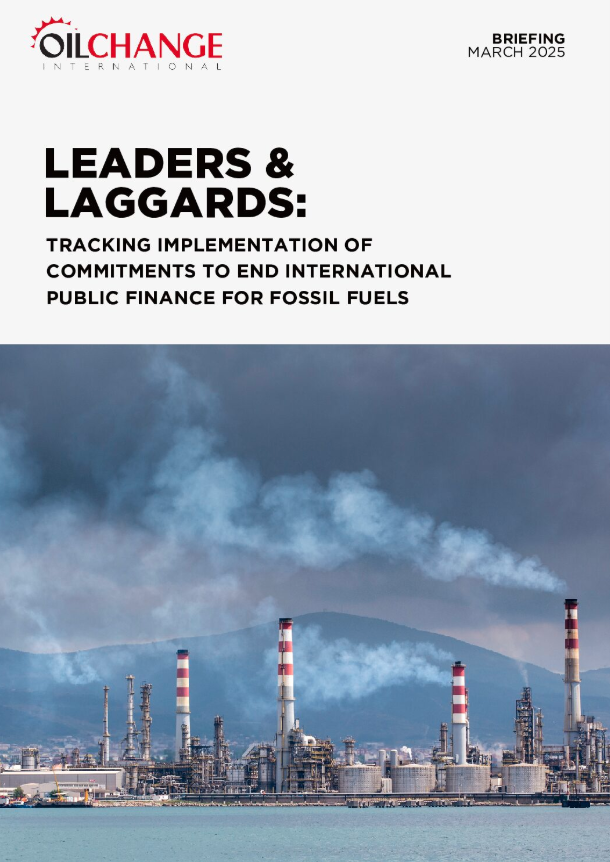
Leaders and Laggards: Tracking implementation of the COP26 commitment to end international public finance for fossil fuels by the end of 2022

*Updated March 27, 2025* At the UN COP26 climate conference, signatories of the Clean Energy Transition Partnership (CETP) agreed to international public finance for fossil fuels. This briefing, which will be updated regularly as new policies come out and new signatories join the commitment, tracks implementation efforts and assesses whether countries are on track to keep their promise.

Report: Countries could shift almost USD 28 billion/year from fossil fuels to jump-start the energy transition—if they follow through on their pledges

The Glasgow Statement on public finance requires signatories to end new direct overseas support for fossil fuels by the end of 2022 and fully prioritize finance for a clean and just energy transition. But only a handful of signatories have begun to turn these pledges into action.

Opportunity to shift G7 finance from fossils to clean energy

This briefing illustrates how G7 public finance flows remain severely misaligned with climate goals. G7 public finance for fossil fuels between 2018 and 2020 totalled over USD 100 billion, four times its support for renewable energy.

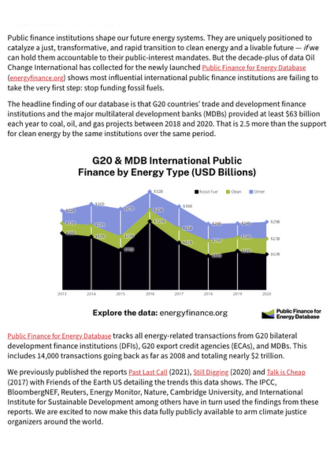
We just launched a database to expose the institutions using our money to fund fossils

Public Finance for Energy Database tracks all energy-related transactions from G20 bilateral development finance institutions (DFIs), G20 export credit agencies (ECAs), and the major multilateral development banks (MDBs). This includes 14,000 transactions going back as far as 2008 and totaling nearly $2 trillion.

Using international public finance to unlock a just transition: key trends and opportunities

This briefing explains why financial flows to fossil fuels matter and how to use the data provided by the Public Finance for Energy Database to help secure a just energy transition.

Past Last Call: G20 public finance institutions are still bankrolling fossil fuels

Our new report “Past Last Call: G20 public finance institutions are still bankrolling fossil fuels” looks at G20 country and MDB public finance for fossil fuels from 2018-2020 for the first time and finds they are still backing at least USD 63 billion per year in oil, gas, and coal projects.

The Sky’s Limit Africa: The Case for a Just Energy Transition from Fossil Fuel Production in Africa

The Sky’s Limit Africa assesses fossil fuel industry plans to sink USD $230 billion into the development of new extraction projects in Africa in the next decade — and USD $1.4 trillion by 2050. It finds these projects are not compatible with a safe climate future and that they are at risk of becoming stranded assets that leave behind unfunded clean-up, shortfalls of government revenue, and overnight job losses.

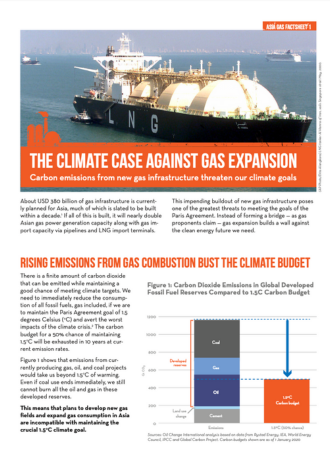
Asia Gas Factsheet #1: The Climate Case Against Gas Expansion

This impending buildout of new gas infrastructure poses one of the greatest threats to meeting the goals of the Paris Agreement. Instead of forming a bridge — as gas proponents claim — gas expansion builds a wall against the clean energy future we need.