
Report: Phasing Out Fossil-Fuel Subsidies in the G20: A Progress Update
In our second review of progress in meeting this phase out commitment we conclude that the G20 effort is currently failing.
Oil Change International publishes upwards of 20 reports and briefings every year focused on supporting the movement for a just phase-out of fossil fuels.
In our second review of progress in meeting this phase out commitment we conclude that the G20 effort is currently failing.
Our latest report finds that global fossil fuel production and consumption subsidies are at least $775 billion annually and could be $1 trillion or even more. There is an urgent need for transparency in subsidy reporting.
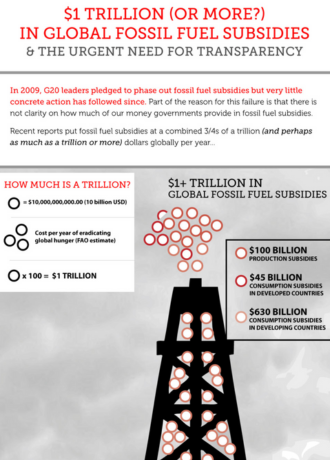
In this graphic, you can see that according to Oil Change International analysis, governments around the world are spending perhaps more than $1 trillion USD combined per year subsidizing the fossil fuel industry.
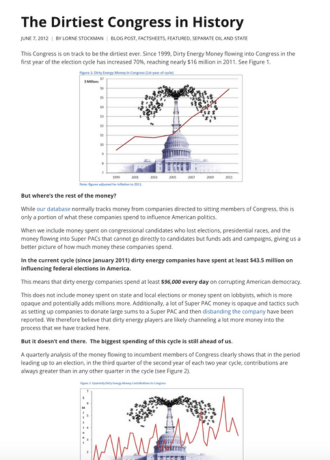
This Congress is on track to be the dirtiest ever. In the current cycle (since January 2011) dirty energy companies have spent at least $43.5 million on influencing federal elections in America.
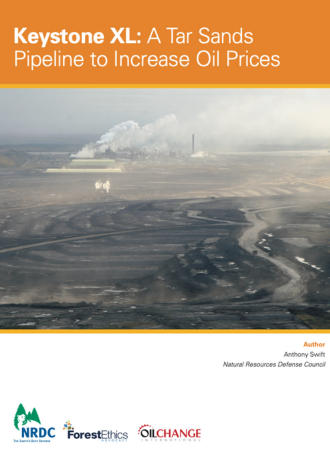
This report finds that Keystone XL would reduce gasoline supplies in America by diverting Canadian tar sands crude from the Midwest to the Gulf Coast, blowing apart the tar sands industry's claims that building the Keystone XL pipeline would lower gasoline prices in America.
This briefing finds that the transport of tar sands oil through pipelines in the United States is exempt from payments into the Oil Spill Liability Trust Fund, which creates a free ride worth over $375 million to tar sands oil producers between 2010 and 2017.
The Keystone XL pipeline has been presented as a boon to U.S. energy security by its proponents. It is no such thing.
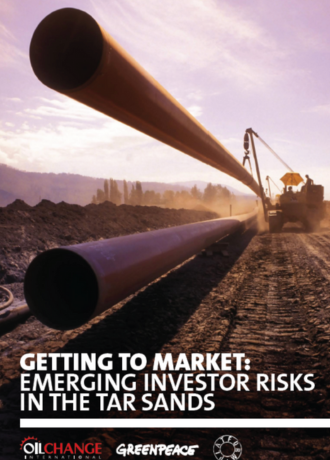
Tar sands extraction projects are moving forward with increasing pace. The industry ambition is to grow production from today’s level an extraordinary 140 percent by 2025.
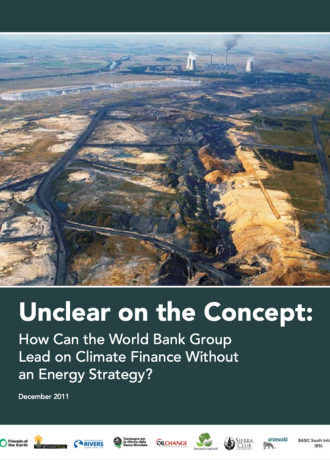
The World Bank Group is experiencing clear difficulties in synching its core lending and its energy strategy with climate goals, and the institution has taken steps that can easily be viewed as creating a conflict of interest. Given these difficulties and contradictions, the institution should focus on cleaning up its own act before making further forays into climate finance initiatives.
The Joint Select Committee on Deficit Reduction, also called the “supercommittee,” must vote by November 23rd on a plan that would reduce the deficit by at least $1.5 trillion. Ending taxpayer subsidies to oil, gas, and coal companies has been suggested by Democratic leaders in Congress and many organizations as something for the chopping block