Research

Oil Change International publishes upwards of 20 reports and briefings every year focused on supporting the movement for a just phase-out of fossil fuels.

Lifting the Ban, Cooking the Climate

The U.S. oil industry’s biggest players, including ExxonMobil and the American Petroleum Institute, are calling for an end to the U.S. ban on crude oil exports that has been in place for more than four decades since the 1973 Arab oil embargo. Their reasons are clear, as lifting the ban would boost profits by enabling companies to sell American oil at higher global market prices.
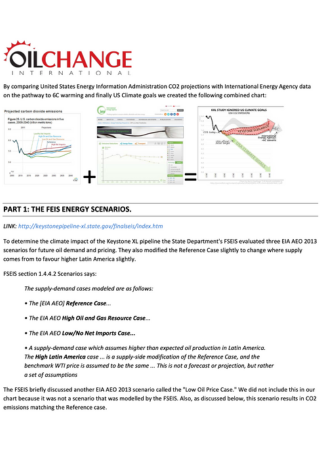
Kerry’s State Department Ignored Obama’s Climate Action Plan

In 2009, President Obama made a commitment to reduce U.S. greenhouse gases by 17 percent by 2020.  The Obama administration put this forward as the U.S. share of a global effort to limit climate change to no more than two degrees Celsius – the target scientists tell us may be safe.  Achieving this target, which has been unanimously agreed on a global level, is central to the success of President Obama’s Climate Action Plan, announced in June of last year.

Ship, Baby, Ship! The push for U.S. crude oil exports has started. Here’s why it’s a terrible idea

Our latest report released today exposes U.S. oil producers that want to export crude oil despite the fact that they still only produce barely more than 50% of U.S. oil demand. 40 years on from the Arab oil embargo and America’s oil producers have only one thing on their minds; profits.

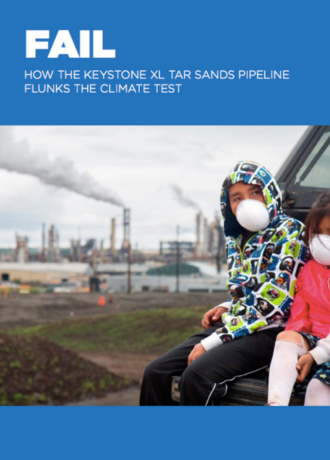
FAIL: How the Keystone XL Tar Sands Pipeline Flunks the Climate Test

The Obama administration’s decision on the proposed Keystone XL tar sands pipeline is a choice about our climate future. Tar sands are one of the most carbon polluting sources of oil on the planet, and limiting tar sands expansion is critical to fighting dangerous levels of climate change. Climate scientists, energy experts, and even Wall Street and industry analysts agree that the oil industry’s plans to expand tar sands development are not possible without this pipeline.

Keystone XL Could Cost Society Over $100 Billion per Year

The Keystone XL Pipeline's social cost of carbon could be as much as $100 billion per year. Until government agencies properly account for the cost of climate change caused by major fossil fuel infrastructure, projects like Keystone XL will continue to impose disproportionate costs on society.

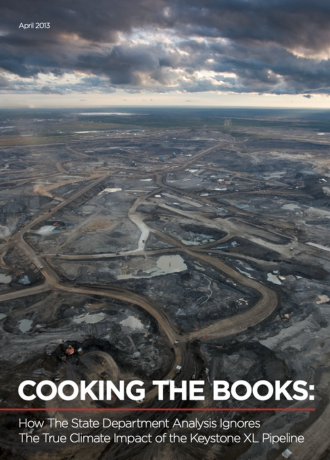
Cooking the Books: The True Climate Impact of Keystone XL

A new report out today from environmental groups shows that the Keystone XL tar sands pipeline would, if approved, be responsible for at least 181 million metric tons of carbon dioxide equivalent (CO2e) each year, comparable to the tailpipe emissions from more than 37.7 million cars or 51 coal-fired power plants.

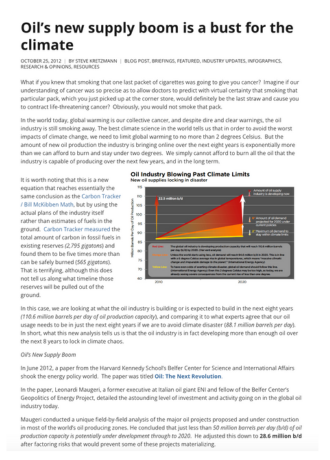
Oil’s new supply boom is a bust for the climate

In the world today, global warming is our collective cancer, and despite dire and clear warnings, the oil industry is still smoking away. The best climate science in the world tells us that in order to avoid the worst impacts of climate change, we need to limit global warming to no more than 2 degrees Celsius.  But the amount of new oil production the industry is bringing online over the next eight years is exponentially more than we can afford to burn and stay under two degrees.  We simply cannot afford to burn all the oil that the industry is capable of producing over the next few years, and in the long term.

A Climate of War

On the fifth anniversary of the Iraq war, this report by Oil Change International quantifies both the greenhouse gas emissions of the Iraq War and the opportunity costs involved in fighting war rather than climate change.