Unburnable Carbon in Protected Areas
This new analysis shows that over 47 Gigatonnes of CO2 could be released by extracting and burning fossil fuels from within protected areas.
Oil Change International publishes upwards of 20 reports and briefings every year focused on supporting the movement for a just phase-out of fossil fuels.
This new analysis shows that over 47 Gigatonnes of CO2 could be released by extracting and burning fossil fuels from within protected areas.
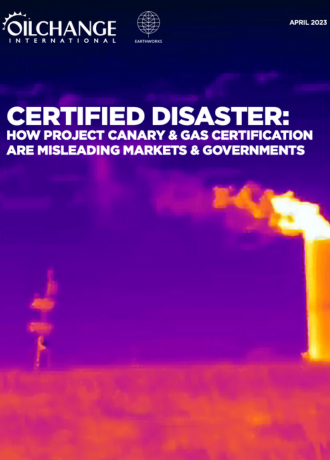
A new report by Oil Change International and Earthworks examines the rapid growth in “certified gas” and exposes on-the-ground failures to detect oil & gas pollution by one of the largest certifiers of methane gas.
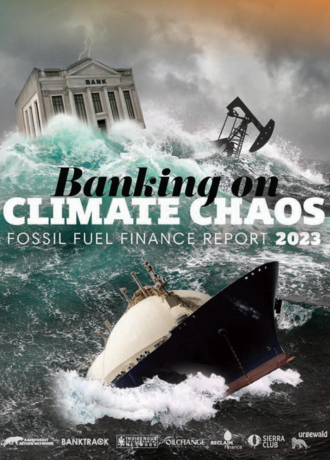
This report, Banking on Climate Chaos 2023, analyzes fossil fuel financing and policies from the world’s 60 largest commercial and investment banks. We reveal that fossil fuel financing from the world’s 60 largest banks has reached nearly USD $5.5 trillion in the seven years since the adoption of the Paris Agreement, with $673 billion in 2022 alone.
The new briefing provides preliminary energy finance data for 2022 and shows that not only investments in new fossil fuel infrastructure are incompatible with meeting climate goals, but also that they are not needed for energy security and development goals.
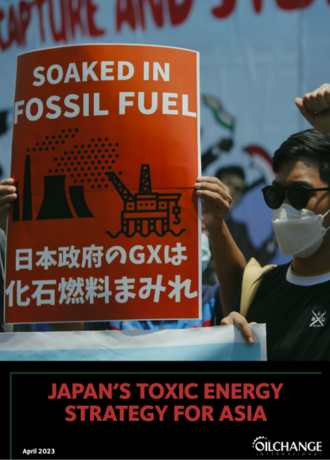
This briefing explains how Japan’s “Green Transformation (GX)” policy is a greenwashing exercise designed to benefit corporate interests and prolong the use of fossil fuels when renewable energy solutions are reliable, available, cleaner, and cheaper.
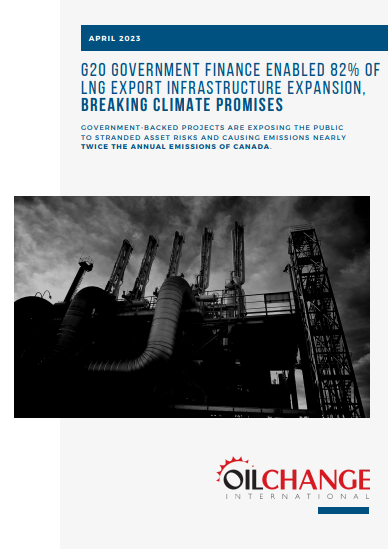
This new briefing shows G20 government institutions were involved in financing 82% of new Liquefied Natural Gas (LNG) export terminal capacity built from 2012-2022, providing at least USD 78 billion in loans, guarantees, and equity investments for new LNG export terminal capacity projects.
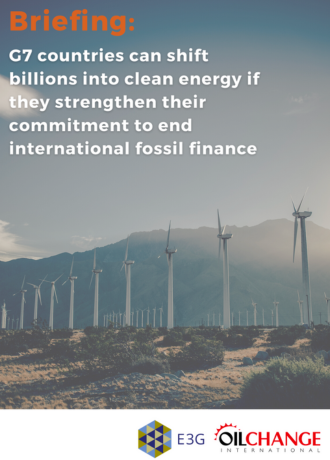
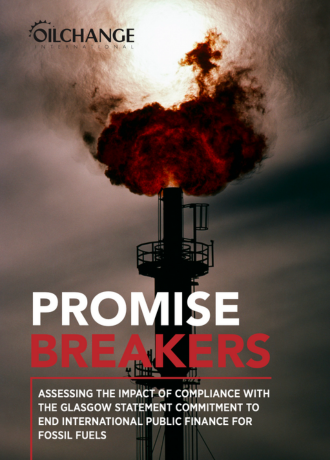
New research shows stop funding fossils commitment forged at the 2021 UN climate summit is already shifting an estimated USD 5.7 billion per year out of fossil fuels and into clean energy. If all signatories fulfill their commitments, then a further 13.7 billion per year will be shifted out of fossil fuels and into clean energy.
This joint position launched by 175 civil society organisations from 45 countries calls on world leaders to end OECD export finance for oil and gas, and explains how it can be done.
New Briefing: Despite pledging to stop international financing for fossil fuel projects by the end of 2022, the Italian Government is continuing to actively consider financing for major international fossil fuel projects that could emit greenhouse gas emissions equivalent to at least 3.5 times Italy’s annual emissions.
The briefing reveals that new oil and gas production approved to date in 2022 and at risk of approval over the next three years could cumulatively lock in 70 billion tonnes (Gt) of new carbon pollution. This is equivalent to almost two years’ worth of global carbon emissions from energy at current levels, 17 percent of the world’s remaining 1.5°C carbon budget, or the lifecycle emissions of 468 coal power plants.