Response to new U.S. guidance that could end billions in public finance for oil, gas, and coal
"Any credible analysis of alternatives and alignment with the Paris Agreement would prevent new fossil fuel projects from being financed," said Tucker.
Oil Change International is a research, communication, and advocacy organization focused on exposing the true costs of fossil fuels and facilitating a just transition to clean energy. For media inquiries, please contact: Valentina Stackl at [email protected]
"Any credible analysis of alternatives and alignment with the Paris Agreement would prevent new fossil fuel projects from being financed," said Tucker.
Response defends original analysis, confirms enormous impact of the MVP project, and highlights the many false assumptions that have caused FERC to ignore gas pipeline GHGs.
"We can't adequately address the climate crisis if we're exporting billions of barrels of oil and gas to be burnt overseas. Confronting Big Oil and Gas’s deadly expansion plans is critical, and that's what Rep. Schakowsky and Rep. Barragán are doing with this bill."
The latest installment reveals that while Permian oil production grew 135% from 2015 to 2020, U.S. oil consumption was stagnant. The spread of pipelines, export terminals, tank farms and petrochemical facilities across the Gulf Coast intensified environmental injustice in the region, and was driven by oil, gas and petrochemical exports, not rising U.S. demand.
Ahead of the first meeting of this group of signatories expected today, a group of 57 civil society organizations from every continent sent a letter to the UK government with recommendations for how to ensure the commitment is effective.
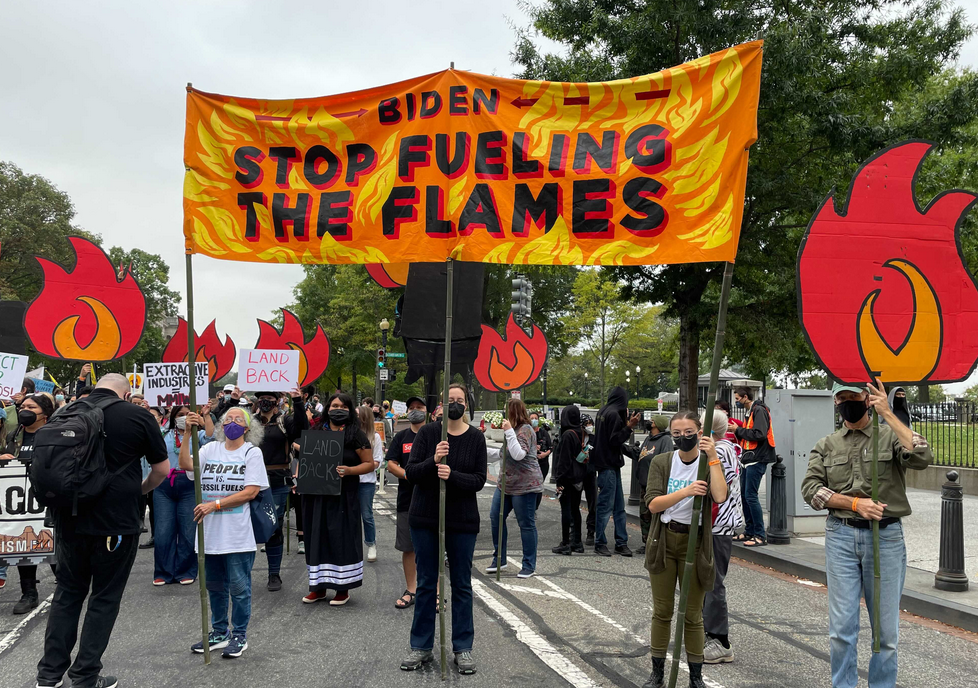
"President Biden promised to end the leasing program entirely due to its deadly threat to the climate, but Interior's recommendations fall far short of that goal — and ring particularly hollow days after the largest lease sale in U.S. history," said Rees.
The time has come for ambitious E3F action, not just ambitious words. We do not want to see a year of vague compromises and exceptions that water the commitment down and lead to continued support for fossil fuels, such as gas - as this not only puts the climate at risks, it also locks countries in the south into fossil dependence with all the economic risks that come along.
A policy brief released today by OCI and ODI shows that despite their commitment to align financial flows with climate goals under the Paris Agreement adopted in 2015, the E3F countries still provided €20 billion in export finance for fossil fuel projects abroad between 2018 and 2020.
After two weeks of negotiations COP26 comes to a close. Our experts respond to the outcomes and highlight some of the important progress that happened outside the negotiating rooms.
"After 30 years, governments finally had the guts to talk openly about the problem of fossil fuel dependence at COP26, but failed to encode a bold solution in their final outcomes."