
World Bank Group Energy Financing: Energy for the Poor?
This study finds that none of the World Bank Group’s fossil fuel finance directly targets the poor or ensures that energy benefits are reaching the poor.
This study finds that none of the World Bank Group’s fossil fuel finance directly targets the poor or ensures that energy benefits are reaching the poor.
The World Bank Group is experiencing clear difficulties in synching its core lending and its energy strategy with climate goals, and the institution has taken steps that can easily be viewed as creating a conflict of interest. Given these difficulties...
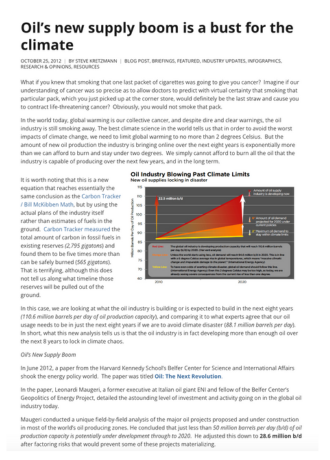
In the world today, global warming is our collective cancer, and despite dire and clear warnings, the oil industry is still smoking away. The best climate science in the world tells us that in order to avoid the worst impacts of...

There is a clear logic that can be applied to the global challenge of addressing climate change: when you are in a hole, stop digging. If we are serious about tackling the global climate crisis, we need to stop exploring, expanding,...
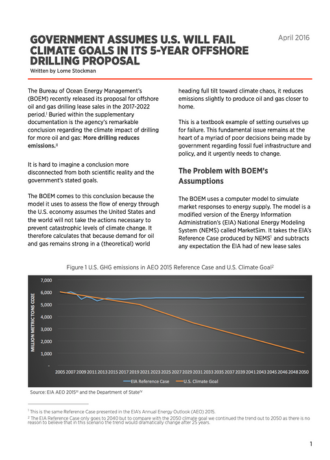
The recently released draft five-year plan for offshore oil and gas drilling is predicated on a failure to act on stated climate policy. To remedy this, the U.S. government should act quickly to implement a climate test in order to...
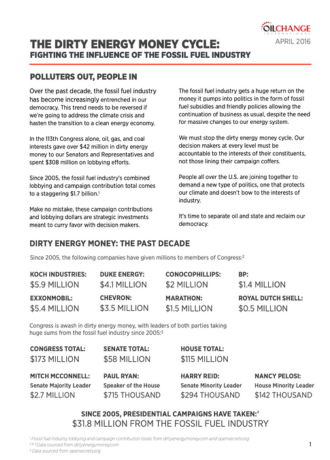
This factsheet shines a light on the millions in campaign contributions made to our elected officials over the past 10 years and the billions in fossil fuel subsidies the industry gets in return.
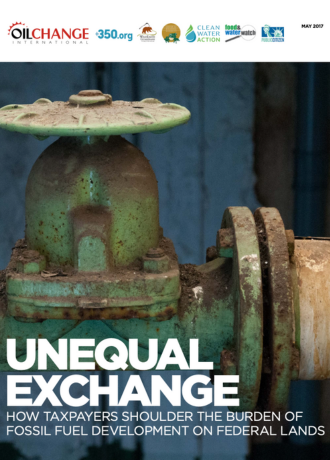
A new report examines the extensive support for fossil fuel production on public lands and waters, provided by the U.S. government to the fossil fuel industry through a combination of direct subsidies, enforcement loopholes, lax royalty collection, and stagnant lease...
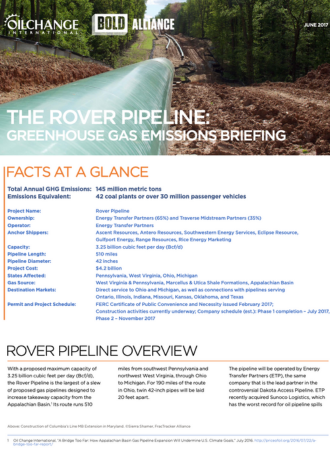
We find that Energy Transfer Partners' Rover Pipeline would lead to annual emissions of nearly 145 million metric tons of carbon dioxide equivalent. This would be the equivalent of adding 42 coal-fired power plants or over 30 million passenger vehicles.
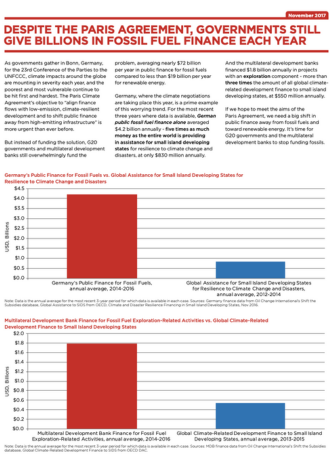
Instead of funding clean energy solutions, G20 governments and multilateral development banks still overwhelmingly fund the problem, averaging nearly $72 billion per year in public finance for fossil fuels compared to less than $19 billion per year for renewable energy.
This report focuses on fossil gas development in the G20 and debunking the myth of fossil gas as a clean transition fuel.