Skip to content
Oil Change International | Data Driven, People Powered.
  • About
    • Our Work
    • Values
    • Team
    • Jobs at OCI
    • Ways to Give
  • Program Areas
    • Africa
    • Asia
    • North Sea
    • United States
    • Global Industry
    • Global Public Finance
    • Global Policy
  • Latest
    • Blog
    • Podcast
    • Press Releases
    • Shell Shocked Land
  • Press Releases
  • Publications
Donate
  • Get Updates
    • Bluesky (opens in a new window)
    • Twitter (opens in a new window)
    • Instagram (opens in a new window)
    • LinkedIn (opens in a new window)
    • Facebook (opens in a new window)
Donate
  • About
    • Our Work
    • Values
    • Team
    • Jobs at OCI
    • Ways to Give
  • Program Areas
    • Africa
    • Asia
    • North Sea
    • United States
    • Global Industry
    • Global Public Finance
    • Global Policy
  • Latest
    • Blog
    • Podcast
    • Press Releases
    • Shell Shocked Land
  • Press Releases
  • Publications
    • Get Updates
    • Share on Bluesky Bluesky
    • Share on Twitter Twitter
    • Share on Instagram Instagram
    • Share on LinkedIn LinkedIn
    • Share on Facebook Facebook
Go to OCI Homepage
OCI Update
Published: March 31, 2026

2025 Annual Report

Around the world, there is political instability, escalating fossil fuel expansion, and growing pressure on communities fighting for a just transition – driven in large part by the greed of the few – led by the oil and gas industry. In the face of escalating injustice and threats to our health and environment, the work we did together laid the critical groundwork for what’s ahead. And through it all, we remained grounded in the fight for justice that has driven us for the past 20 years.


  • Latest from OCI
  • Blogs listing
  • 2025 Annual Report
  • Linkedin Linkedin (opens in a new window)
  • Twitter Twitter (opens in a new window)
  • Facebook Facebook (opens in a new window)
  • link link Copy
  • Mail Mail (opens in a new window)
  • Linkedin Linkedin (opens in a new window)
  • Twitter Twitter (opens in a new window)
  • Facebook Facebook (opens in a new window)
  • link link Copy
  • Mail Mail (opens in a new window)
    • Annual Report OCI Update
Elizabeth Bast

Elizabeth is the Executive Director of Oil Change International.

[email protected]

Letter from the Executive Director

Dear friends of Oil Change International, 

2026 began with a jolt. Within days, Trump launched a military campaign in Venezuela aimed at securing oil resources, retracted U.S. participation in both the Paris Agreement and the UN Framework Convention on Climate Change, and doubled down on climate denial. Beyond the United States, atrocities in Gaza, violence in Sudan, and war in Ukraine continue and we are seeing backtracking on many issues we care about. 

It’s hard, in moments like these, to pause and look back. But in 2025, in the face of escalating injustice and threats to our health and environment, the work we did together is where we have laid the critical groundwork for what’s ahead. I am filled with gratitude for our staff, our partners, and our supporters. Thank you.

2025 also marked our 20th anniversary at Oil Change. For twenty years we have worked to expose the true costs of fossil fuels and make the transition to clean energy possible. We are now a global organization of 45 people based all around the world. We are an organization with a strong history, with passionate and experienced staff, driven by deep strategic thinking and conviction that has steered us well. Our experience and our mission makes us uniquely prepared to meet this moment as we work towards a just and equitable fossil-free world.

Join me in reflecting on what we achieved in 2025, celebrating our collective impact, and finding renewed strength for the road ahead. And again, thank you for your support.

Powering Movements and Frontline Resistance

In every region where we work, we supported frontline movements to stop fossil fuel expansion and demand climate justice.

In Europe, we celebrated a major victory years in the making: the UK government announced an almost total ban on new oil and gas licenses. When we think about how to achieve a global phase out of oil and gas and a just transition to clean energy, it’s clear producer countries must lead. The UK took this significant first step towards a future without oil and gas, following years of strategizing and campaigning by us alongside many, many groups, individuals, and allies in the UK and beyond.

In Asia, we continued to push back against Japan’s gas and LNG agenda. We supported a Global Day of Action around the Asia Zero Emissions Community (AZEC) Summit to make it clear that gas is not “clean.” We hosted media tours showcasing connections between Japan’s finance and local impacts in the US and Australia. 

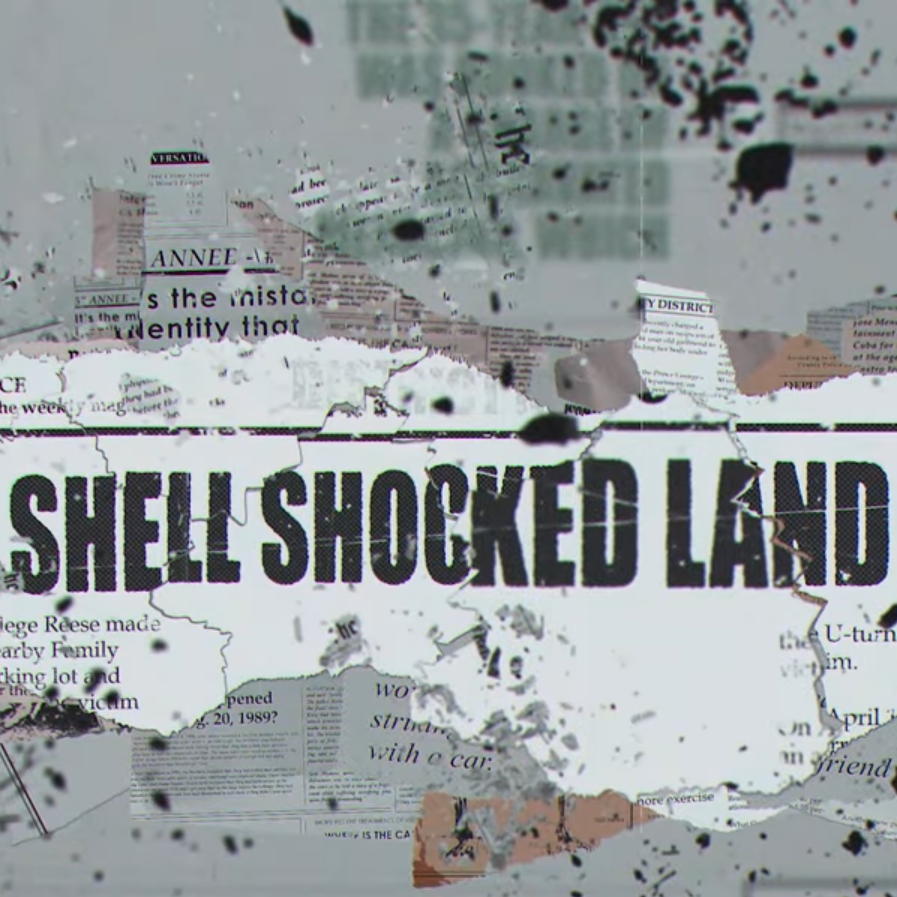
In Africa, we deepened our work to stop fossil fuel expansion and protect vital ecosystems, elevating resistance in the Niger, Saloum, and Okavango Deltas, each facing grave threats from oil development. OCI commemorated 30 years following the murder of the Ogoni 9 in the Niger Delta by releasing a documentary, Shell Shocked Land. 

In North America, we exposed the US government’s continued support for Big Oil. Our report, Paying for Climate Chaos, revealed nearly $35 billion in annual subsidies and policy support for the fossil fuel industry. We’ve also spent much of this year supporting movement and coalition efforts to fight back against fossil fuels, connecting the economic impacts of continued fossil fuel expansion to the government overreach and takeover by corporate interests.

Shaping Global Policy and Finance

We are also building a powerful movement to power a just transition and hold governments accountable to their commitments to phase out fossil fuels.

As wealthy nations gathered at global meetings throughout the year, money for climate action took center stage. Our team worked to ensure these high-level discussions didn’t just produce empty promises. We showed how we can pay for a just transition: our We Can Pay For It research shows that rich countries alone can unlock $6.6 trillion every year for climate action by ending fossil fuel subsidies, taxing billionaires and polluters, cancelling illegitimate debts, and cutting bloated military budgets. 

Back in 2023 at COP28, all countries committed to transitioning away from fossil fuels in an equitable manner, with the richest countries with the highest capacity phasing out first. But the latest update to our Planet Wreckers report shows that four Global North countries – the United States, Canada, Norway, and Australia – are set to drive continued oil and gas expansion from 2025 to 2035. This helped shape the global narrative on the need to accelerate the fossil fuel phase out and pressure Global North countries to step up negotiations. At COP30 in 2025, more than 80 countries demanded a fossil fuel phaseout roadmap, progress we’ll continue to build on, especially with Colombia and the Netherlands stepping up to host the first global just transition summit.

Staying Grounded in Justice

Twenty years ago, OCI was founded to confront the oil industry’s grip on our world. Oil fuels climate change, oil fuels conflict, oil makes us sick, oil erodes our democracy, and oil doesn’t support development goals. We have the solutions and have two decades of progress and victories to build from. In 2026, we’ll continue growing and adapting OCI to match the scale of our ambition and to meet the moment. Together, we’ll dig deeper, think bigger, and focus on what matters most: justice, accountability, and a livable future.

Thank you for being in this fight with us.

In solidarity,

Elizabeth S. Bast
Executive Director
Oil Change International

Reaching New Audiences

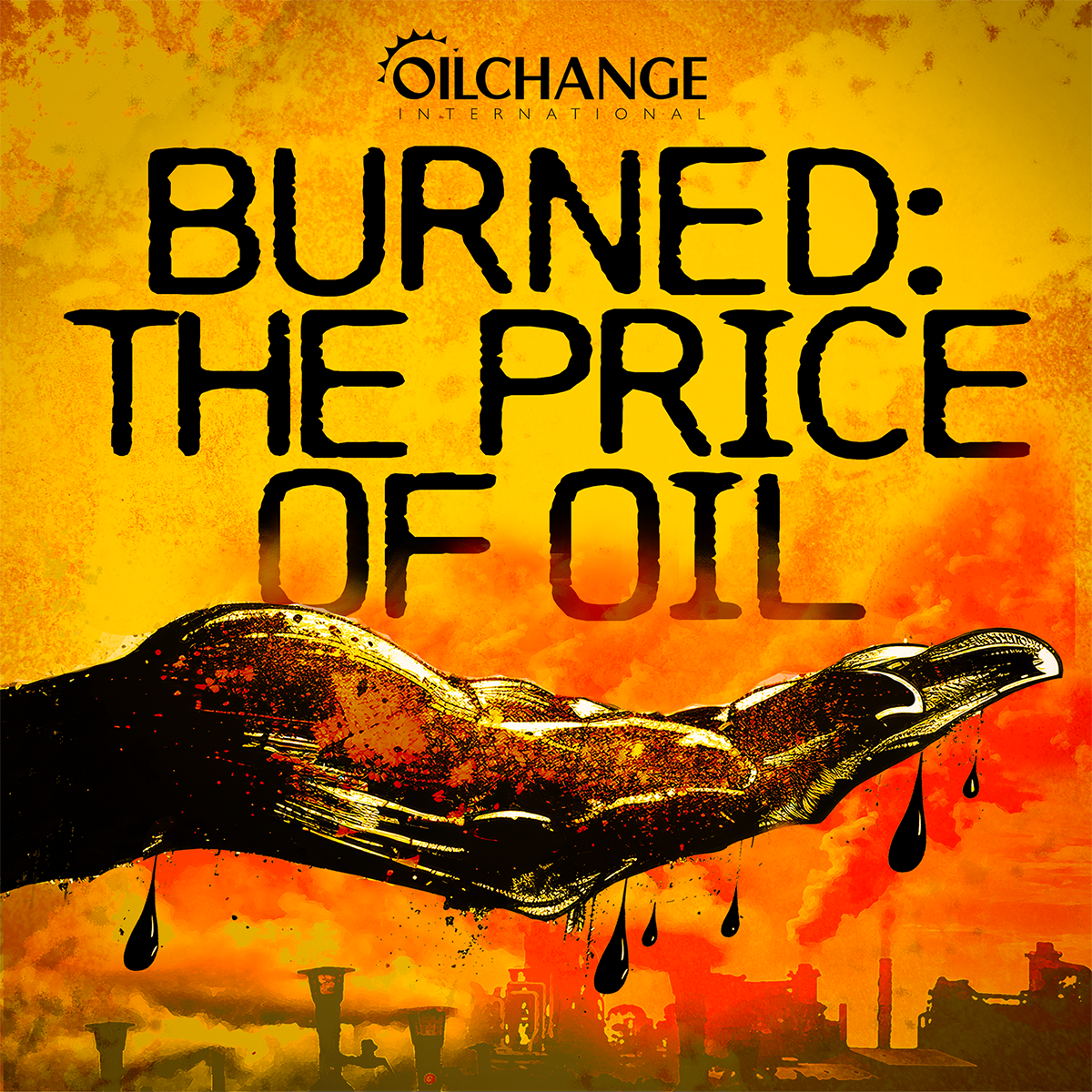
We launched our first-ever podcast, Burned: The Price Of Oil, which pulls back the curtain on the true cost of fossil fuels and the villains blocking climate action and discusses how people-powered movements are forging the path for a just and equitable transition. We also launched Shell Shocked Land, a short documentary, on the 30th anniversary of the execution of Ken Saro-Wiwa and the Ogoni 9. The film honors the legacy of environmental resistance in the Niger Delta.

Burned: The Price of Oil

Burned: The Price of Oil is a podcast where we expose the true cost of fossil fuels and the villains blocking climate action. We also look at how a movement of people power is fighting back to create momentum for a just and equitable transition away from fossil fuels that leaves no one behind.

Shell Shocked Land

On November 10, 1995 a group of climate activists in Nigeria, known as the Ogoni-9, were framed and executed by the Nigerian government for leading the fight against Shell’s ecological destruction of Ogoniland. Their deaths send shockwaves through the international climate justice community.

Burned: The Price of Oil

Burned: The Price of Oil is a podcast where we expose the true cost of fossil fuels and the villains blocking climate action. We also look at how a movement of people power is fighting back to create momentum for a just and equitable transition away from fossil fuels that leaves no one behind.

18 reports, briefings, factsheets, and investigations.

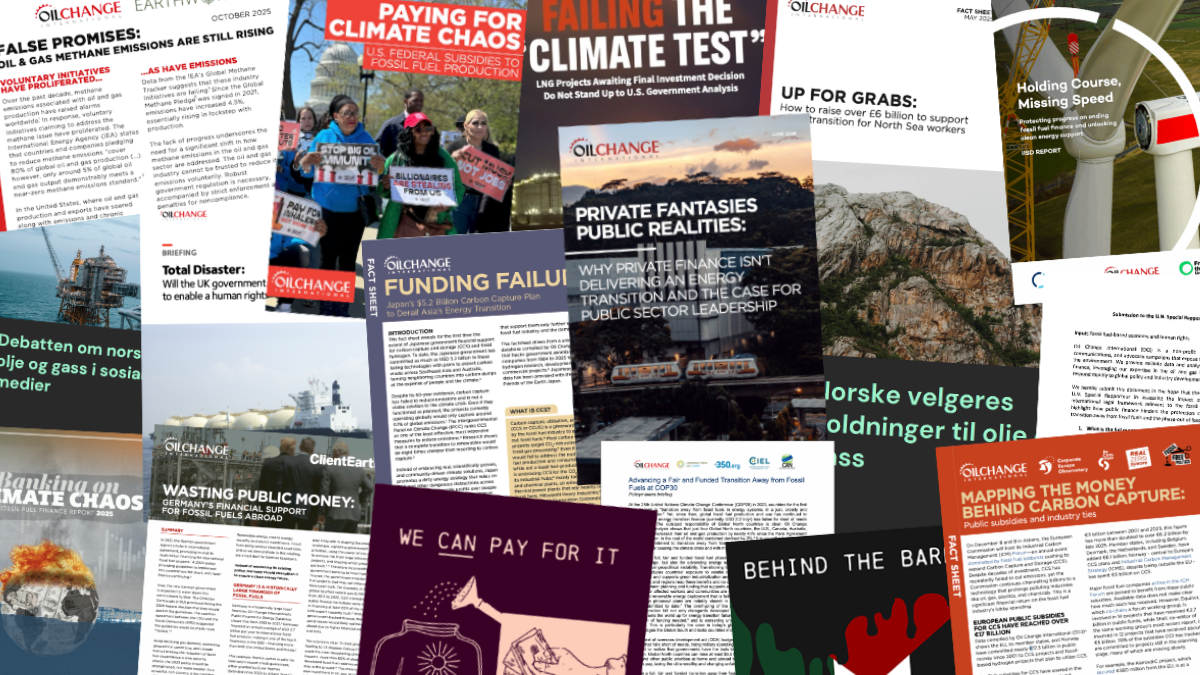
In 2025, OCI produced 18 reports, briefings, factsheets, and investigations. Our work was cited by news outlets and campaigners around the world as part of the fight for an end to the fossil fuel era. Here are some highlights.

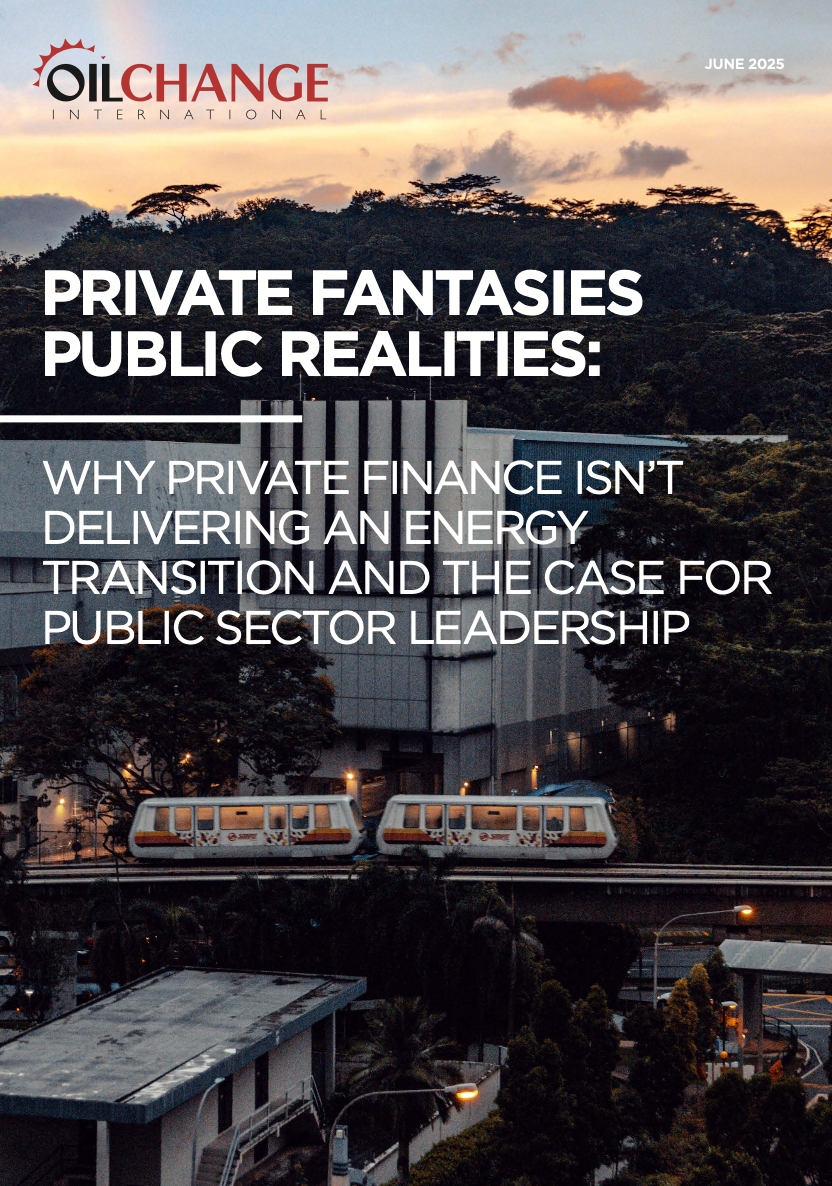
Private Fantasies, Public Realities: Why private finance isn’t delivering an energy transition and the case for public sector leadership

Using a new dataset compiled by OCI, this report details how governments’ dominant “private-sector first” approach to financing a just energy transition is prolonging the fossil fuel era by failing to deliver the scale, distribution, or quality of funding needed.

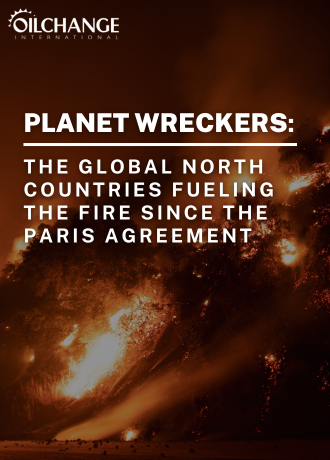
Planet Wreckers: The Global North Countries Fueling the Fire Since the Paris Agreement

This report shows that since the Paris Agreement was adopted in 2015, just four Global North countries – the U.S., Canada, Australia, and Norway – derailed potential for global progress in phasing out oil and gas by collectively increasing their oil and gas production by nearly 40 percent between 2015 and 2024.

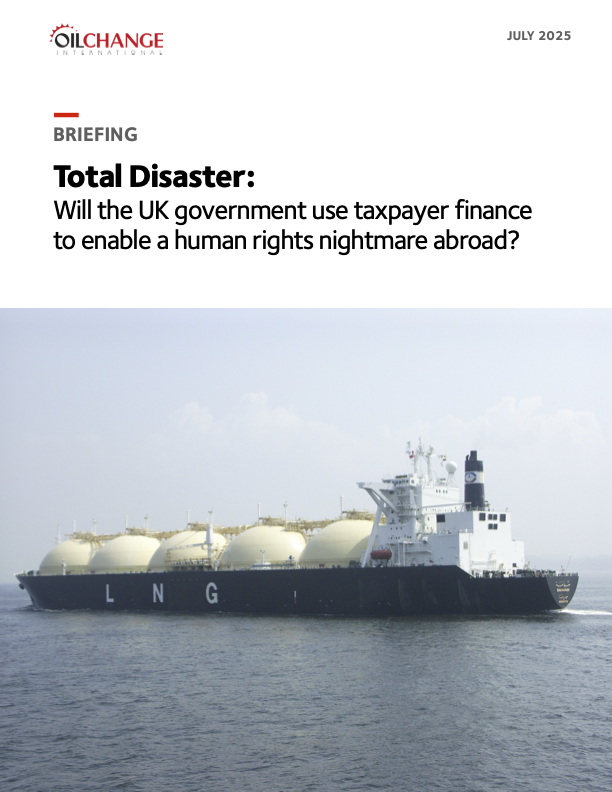
Total Disaster: Will the UK government use taxpayer finance to enable a human rights nightmare abroad?

This briefing details the many problems associated with the Mozambique liquefied gas project and how it would risk thousands of lives in Mozambique, the UK’s claims to climate leadership, and would make the UK complicit in corruption.

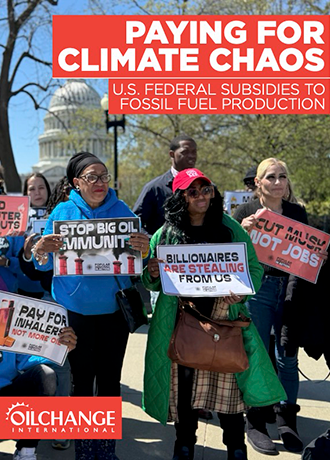
Paying for Climate Chaos: U.S. Federal Subsidies for Fossil Fuel Production

This report provides an updated estimate of federal subsidies to fossil fuel production in the United States, using data from 2024 and 2025. It finds that the federal government currently hands the fossil fuel industry an estimated $34.8 billion annually, further enriching Big Oil, Gas, and Coal CEOs, shareholders, and investors.

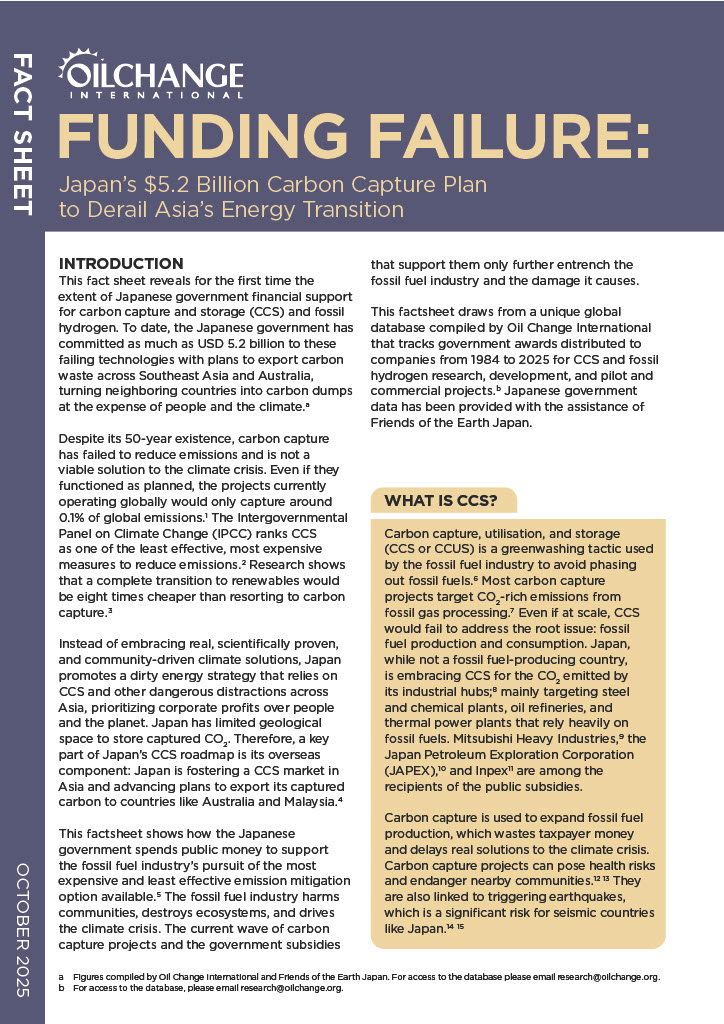
Funding Failure: Japan’s $5.2 Billion Carbon Capture Plan to Derail Asia’s Energy Transition

This fact sheet illustrates Japan’s $5.2 billion spending of public funds on carbon capture technology since 2014 and how Japan is pushing this failed model across Southeast Asia while planning to turn the region into a dumping ground for its carbon waste.

Celebrating our 2025 Wins for a Fossil-Free Future

2025 marked Oil Change International’s 20th Anniversary

That’s two decades of exposing how the fossil fuel industry harms our climate, communities, and democracy. In today’s turbulent landscape, we’re reminded that we’ve weathered storms before. As climate progress comes under renewed threat, this moment demands exactly the kind of strategic, truth-telling work OCI has honed over twenty years.

Honoring the legacy of the Onogi 9

We produced Shell Shocked Land, a documentary that honors the Ogoni 9. Led by Ken Saro Wiwa, the Ogoni 9 were a group of activists in Nigeria who were framed and executed by the Nigerian government in 1995 for leading the fight against Shell’s ecological destruction of Ogoniland. Their murders helped spark the creation of Oil Change International a decade later and their legacy continues to guide our work today.

Planet Wreckers get the spotlight with our new report

This update to our 2023 report Planet Wreckers shows how four Global North countries – the United States, Canada, Norway, and Australia – are responsible for nearly 70% of projected new oil and gas expansion from 2025 to 2035. This is despite the fact that, at COP28, all countries committed to transitioning away from fossil fuels in an equitable manner, with the richest countries with the highest capacity phasing out first. Released ahead of the 2025 climate talks, Planet Wreckers helped shape the global narrative on the need to accelerate the fossil fuel phase out and pressure Global North countries to put money on the table and commit to action. At COP30, more than 80 countries demanded a fossil fuel phaseout roadmap, progress we’ll continue to build on, especially with Colombia and the Netherlands stepping up to host the first global just transition summit.

The UK announced an almost total ban on new oil and gas licenses

After decades of work by Oil Change International and our partners, including releasing data like Planet Wreckers, the United Kingdom has announced a licensing ban on all new oil and gas exploration in the North Sea. This announcement signals a long-overdue pivot away from fossil fuel expansion in the North Sea and towards the fast, fair, full phase-out we know is needed.

$1 billion in financing denied

The UK government also denied over $1 billion in financing to TotalEnergies’ massive Liquefied Natural Gas (LNG) in Mozambique, which then led to Total rescinding a request for export credit financing to the Dutch government. This significant reduction in finance could potentially present a challenge to the project going forward, but at the very least shows that governments are willing to take a principled stand against projects that are at odds with human rights and protecting our environment.

Unmasking dangerous distractions

We continue to fight back on Big Oil’s greenwashing. In September, we published a deep dive into the oil and gas industry’s increasing methane emissions. In spite of the Global Methane Pledge, an international initiative to reduce global methane emissions launched in 2021, the International Energy Agency’s own methane tracker shows emissions continue to rise in line with oil and gas production growth, discrediting the IEA’s claim that oil and gas companies can reduce emissions cost-effectively. The answer is clear. Reducing methane emissions requires phasing out fossil fuels, including gas.

Building a pan-North Sea collaboration between environment groups, unions and decision makers

In 2025, OCI convened a North Sea roundtable in Oslo, bringing together unions, environmental groups, and decision makers – actors rarely in the same room – to build trust and dialogue around a just transition. This convening strengthened relationships across borders and sectors, laid groundwork for long-term collaboration, and generated genuine enthusiasm among participants to continue joint initiatives.

Norway takes a first step toward transition planning

In November the majority in Parliament announced that Norway would appoint its first ever Transition Commission, following the Labour Party’s budget negotiations with the Green Party. Together with partners, OCI has pushed for this commission and for Norway to begin planning and funding a managed transition away from fossil fuel production. While the commission alone won’t stop new projects, it marks the first acknowledgement by a Labour-led government that Norway’s oil and gas era will end and must be planned for. We will continue to build pressure nationally and internationally to ensure this process delivers real change.

Important momentum at global climate talks

At the UN climate negotiations in November, over 80 countries called for the inclusion of a fossil fuel roadmap in the text of the final decision. While that demand was not reflected in the final decision, negotiations did deliver a new just transition package — the Belém Action Mechanism. Colombia and the Netherlands also announced plans to host the first international conference on the just transition away from fossil fuels.

Showing how we can pay for a just transition

Our We Can Pay for It research shows how rich countries alone can unlock $6.6 trillion every year for climate action by ending fossil fuel subsidies, taxing billionaires and polluters, cancelling illegitimate debts, and cutting bloated military budgets. This research helped form a clear through-line at COP30 in Belem showing that lack of money isn’t the problem, it’s our priorities and a lack of political will.

Global days of action during the AZEC Summit

36 civil society organizations across the Asia-Pacific organized a Global Day of Action – showing that when we band together we are unstoppable. From Tokyo to Kuala Lumpur to Sydney, OCI supported activists as they took to the streets calling on this grouping of Asian governments to do more to promote renewable energy rather than prop up fossil fuels.

We look forward to what’s ahead in 2026 as we work together to create a fossil-free future.

Oil Change International | Data Driven, People Powered.
Donate Get Updates
Back to the top
  • Keep in touch
  • Oil Change International
    714 G St. SE, #202
    Washington, DC 20003
    United States

    +1.202.518.9029

    [email protected]

    • Bluesky (opens in a new window)
    • Twitter (opens in a new window)
    • Instagram (opens in a new window)
    • LinkedIn (opens in a new window)
    • Facebook (opens in a new window)
  • Quick links
  • About OCI
  • Our Values
  • Jobs at OCI
  • Ways to Give
  • Media Centre
  • Publications
  • Press
  • Associated websites
  • Big Oil Reality Check
  • Energy Finance Database
  • Permian Climate Bomb
  • Site map
  • Privacy policy
  • Accessibility statement

Copyright © 2026 Oil Change International. Web design by Fat Beehive