
Another Day, Another Crude by Rail Accident
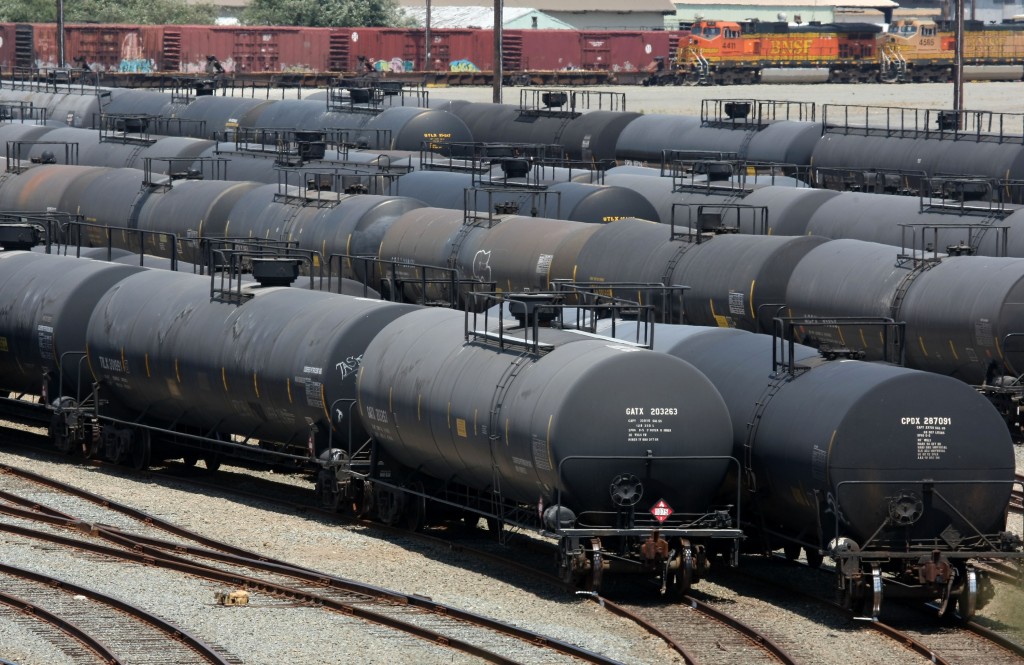
Another day and yet another crude oil train derails in North America, highlighting the growing risk of carrying crude by rail.
 Another day and yet another crude oil train derails in North America, highlighting the growing risk of carrying crude by rail.
Yesterday, a Canadian National Railway train carrying crude oil and propane derailed and caught fire yesterday in northwest New Brunswick, Canada. Some 15 rail trucks were said to have derailed. It is unclear what kind of crude oil the train was carrying.
Although no one was injured in the accident, it led to the evacuation of 45 nearby homes, when the train derailed at about 7 PM local time.
This latest derailment comes just over a week when another crude oil train exploded and derailed. It is unclear whether the explosion caused the derailment or vice versa.
What is known is that the 106-car oil train came off the rails and exploded near the town of Casselton, North Dakota. It was carrying fracked oil from the Bakken shale deposits.
Although no one was hurt in the incident, the concern about toxic fumes prompted the evacuation of hundreds of residents from the local town.
US safety authorities are now warning that oil produced from Bakken shale may be more explosive than normal crude. In recent safety advice, published on 2nd January, the Pipeline and Hazardous Materials Safety Administration (PHMSA) advised that recent explosions “indicate that the type of crude oil being transported from the Bakken region may be more flammable than traditional heavy crude oil.”
Bakken crude seems to be more flammable at lower temperatures than normal crude. It is more like gasoline than a traditional thick black molasses, which many of us picture when thinking about crude oil.
Indeed a scientist from the NGO, Water Defence, Scott Smith, argues that Bakken crude has a significantly higher content of flammable Volatile Organic Compounds or VOCs than normal crude. Smith argues that between “30 to 40 per cent of what is going into those rail cars are explosive volatiles”.
The PHMSA is now asking for all crude types to be tested before they are transported and is itself trying to work out why Bakken crude is more flammable and prone to exploding.
The evidence is stacking up. In the last few months, three shipments of Bakken crude have exploded. One derailment in in Lac-Megantic, Canada, left 47 people dead and caused widespread devastation in the town.
In November, another oil train derailed and exploded in Alabama, spilling 750,000 gallons of oil from 26 tanker cars.
The string of accidents has also led to the former head of PHMSA to call for a re-examination of the rules for shipping crude by train.
Brigham McCown, who was head of PHMSA in 2005, said “As we ship more energy supplies by rail, we have to take a tougher look at the regulations that are in place. Spilling a boxcar of celery or lumber is obviously not the same thing as a rail car of crude.”
Something clearly needs to be done and fast. The amount of crude by rail is rocketing.
In 2008, only 9,500 carloads of crude oil were transported, whereas last year the figure was 400,000.