
Skip to content
Oil Change International | Data Driven, People Powered.
  • About
    • Our Work
    • Values
    • Team
    • Jobs at OCI
    • Ways to Give
  • Program Areas
    • Africa
    • Asia
    • North Sea
    • United States
    • Global Industry
    • Global Public Finance
    • Global Policy
  • Latest
    • Blog
    • Podcast
    • Press Releases
    • Shell Shocked Land
  • Press Releases
  • Publications
Donate
  • Get Updates
    • Bluesky (opens in a new window)
    • Twitter (opens in a new window)
    • Instagram (opens in a new window)
    • LinkedIn (opens in a new window)
    • Facebook (opens in a new window)
Donate
  • About
    • Our Work
    • Values
    • Team
    • Jobs at OCI
    • Ways to Give
  • Program Areas
    • Africa
    • Asia
    • North Sea
    • United States
    • Global Industry
    • Global Public Finance
    • Global Policy
  • Latest
    • Blog
    • Podcast
    • Press Releases
    • Shell Shocked Land
  • Press Releases
  • Publications
    • Get Updates
    • Share on Bluesky Bluesky
    • Share on Twitter Twitter
    • Share on Instagram Instagram
    • Share on LinkedIn LinkedIn
    • Share on Facebook Facebook
Go to OCI Homepage
Published: May 02, 2007

Arctic Ice Vanishing Faster Than Expected
  • Latest from OCI
  • Blogs listing
  • Arctic Ice Vanishing Faster Than Expected
    • Climate impacts extreme energy melting glaciers

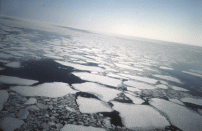
Scientists may have seriously underestimated the speed at which Arctic sea ice will melt in the coming decades, according to a study published today.

Researchers have found that the sea ice, which is essential for polar bears to hunt seals, is melting far more quickly than the UN’s Intergovernmental Panel on Climate Change (IPCC) has predicted, largely because of accelerated warming caused by climate change.

The IPCC models now seem very cautious and predict that summer sea ice in the Arctic could disappear completely around 2080 but scientists from the US National Snow and Ice Data Centre in Boulder, Colorado, suggest that the loss could occur 30 years earlier if current melting rates are maintained.

Julienne Stroeve, the lead researcher, said: “Current model projections may in fact provide a conservative estimate of future Arctic change, and that the summer Arctic sea ice may disappear considerably earlier than IPCC projections.”


Oil Change International | Data Driven, People Powered.
Donate Get Updates
Back to the top
  • Keep in touch
  • Oil Change International
    714 G St. SE, #202
    Washington, DC 20003
    United States

    +1.202.518.9029

    [email protected]

    • Bluesky (opens in a new window)
    • Twitter (opens in a new window)
    • Instagram (opens in a new window)
    • LinkedIn (opens in a new window)
    • Facebook (opens in a new window)
  • Quick links
  • About OCI
  • Our Values
  • Jobs at OCI
  • Ways to Give
  • Media Centre
  • Publications
  • Press
  • Associated websites
  • Big Oil Reality Check
  • Energy Finance Database
  • Permian Climate Bomb
  • Site map
  • Privacy policy
  • Accessibility statement

Copyright © 2026 Oil Change International. Web design by Fat Beehive