
From Climate Action to People Power: What Bangkok Taught Me About Our Energy Transition Future
I came to Bangkok thinking about Japan’s fossil fuel expansion. I left thinking about power and the need to build it together across movements. We cannot build a just energy future without a stronger people’s movement to shape it. Because the climate crisis is not only about energy. It is also about inequality, economic dependency, and the concentration of power. And if we want a genuinely just energy transition in Asia, we will have to confront all of them.
Bangkok is famous for its delicious street food, busy markets, traffic jams, and vibrant nightlife. But I left the city thinking about something else: who gets to decide our energy future?
On October 16, the streets of Bangkok brought together people whose struggles might, at first, seem very different. Social movements, trade unions, peasant and farmers’ organizations, Dalit people from India, and Indigenous Peoples, feminist collectives, climate advocates, youth, and civil society alliances had gathered around a shared message: people must have a say in the economic decisions that shape their lives. They presented their demands, including a clear call to end fossil fuel subsidies and immediately stop all World Bank financing for fossil fuel projects. Standing among them, I kept going back to one idea. The struggles people face every day cannot be separated from the economic and political decisions made far above them. Decisions about energy and development are being made in their name even without their voices.
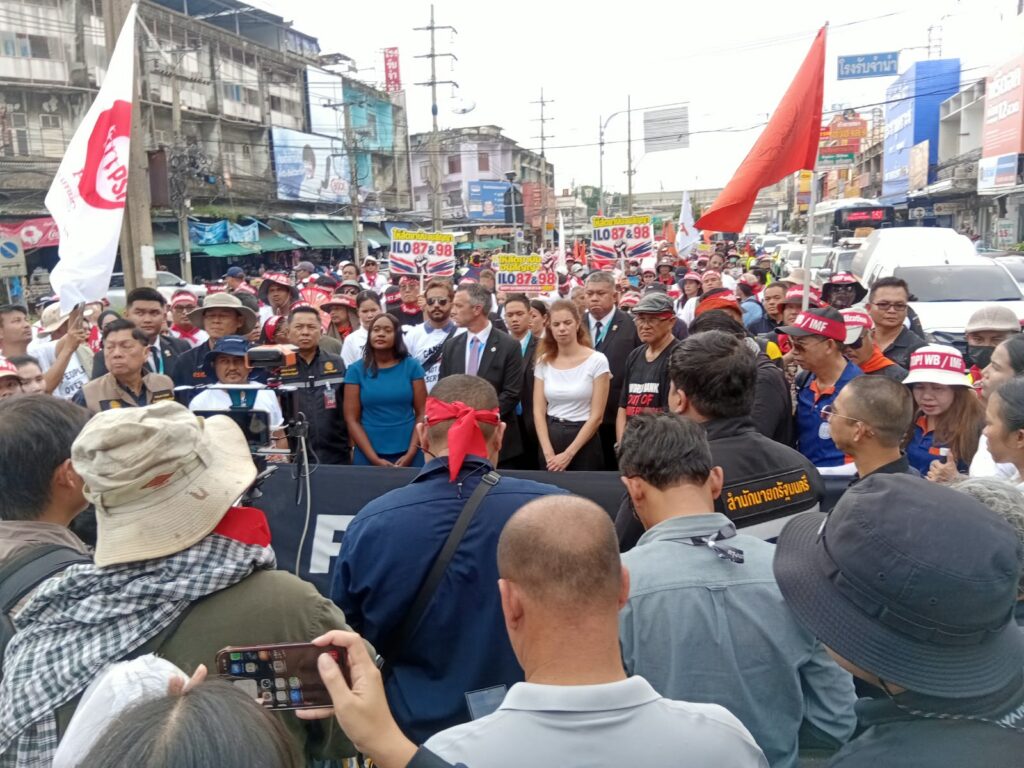
Around 700 Thai activists, led by the labor movement, joined approximately 200 international activists in a peaceful demonstration to deliver those demands to the International Monetary Fund (IMF) and World Bank. Four representatives of the institutions came out to meet the protesters and receive their message.
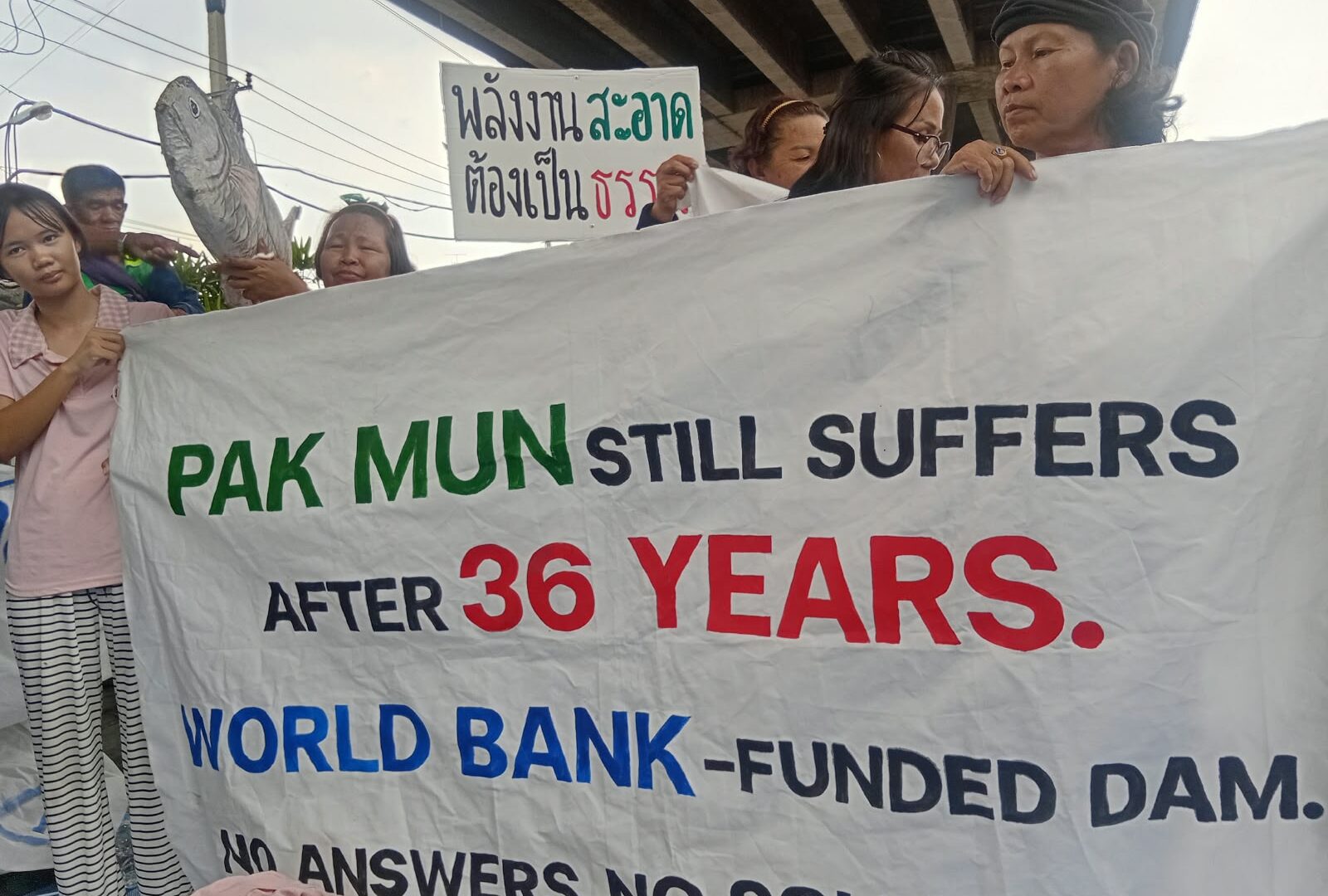
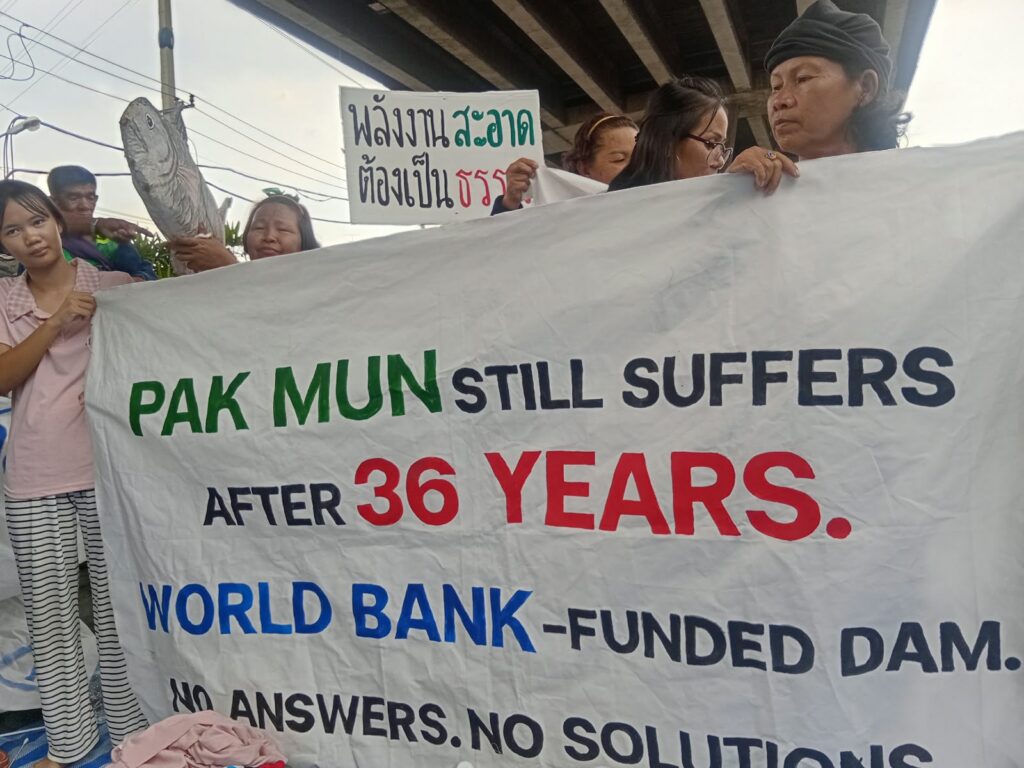
But the mobilizations had begun as early as October 15, when communities affected by development projects also took to the streets, urging the IMF and World Bank to listen to the people whose lives are shaped by the policies and investments they support.
That march capped two weeks of gatherings in Thailand where I attended the Bangkok Climate Action Week (BKKCAW) and the International Peoples’ Assembly organized by the Asian Peoples’ Movement on Debt and Development (APMDD). Being there, I was struck by a familiar concern: the continued expansion of fossil fuels in Asia, often under the guise of a “cleaner and more secure energy future.” I left with a broader question. Can we really achieve a just energy transition without changing the economic and political structures that have created so much inequality and environmental destruction in the first place?
From Climate Justice to Economic Justice: People’s movements at the heart of Bangkok
Bangkok Climate Action Week brought together an interesting mix of people: climate campaigners, researchers, young activists, artists, policymakers, and community organizations. I joined conversations that brought these contradictions into focus. Sessions discussed the impacts of fossil projects on communities, from pollution and health concerns to the need for greater accountability, and brought attention to the experiences of people on the frontlines of environmental and development struggles.
These discussions brought me back to the communities I have encountered through my work. The impacts of energy projects are not abstract. They are felt in people’s health, their access to land and fishing grounds, and their ability to sustain their livelihoods. And when governments and investors describe these projects as part of the energy transition, we need to ask: a transition for whom?
The International Peoples’ Assembly, organized by APMDD, brought together movements working on debt, taxation, economic justice, climate, labor, migration, women’s rights, Indigenous peoples’ rights, and many other issues. The Assembly ran alongside the annual meetings of the International Monetary Fund and World Bank, also held in Bangkok. The contrast was striking.
While financial institutions and government officials gathered to discuss the global economy, civil society movements came together to question the economic structures that keep producing inequality, debt dependency, and environmental destruction. The Assembly’s discussions covered a remarkable range of issues, from climate justice and energy transition to critical minerals, extractivism, international finance, and public services. What struck me most was how closely connected these issues are.
Take the energy transition, for example. Developing countries are under pressure to invest heavily in new energy infrastructure, industrial facilities, and technologies. Much of it is financed through international loans, foreign companies, and economic arrangements that can create long-term financial obligations.
But what happens when those investments primarily serve the interests of foreign corporations rather than the needs of local communities? When countries accumulate debt to finance infrastructure that could become economically uncompetitive or environmentally damaging? When communities have little say in decisions that will affect their lives for generations? These are not separate questions about energy, finance, or development. They are different dimensions of the same problem. The Assembly reminded me that the struggle for a just energy transition is also a struggle for economic justice, democratic decision-making, and people’s control over their own development.
Japan’s promise and the other side of the story
I work with civil society coalitions challenging Japan’s fossil fuel expansion in Asia, including its Asia Zero Emission Community (AZEC) initiative. Through AZEC, Japan presents itself as a partner in Asia’s energy transition. But behind this promise, it continues to promote technologies such as LNG, ammonia co-firing in coal plants, hydrogen blending in gas plants, and carbon capture and storage. Rather than helping countries move away from fossil fuels, these technologies risk extending their use and locking communities into decades of fossil fuel dependence. Our work often involves examining investment agreements, tracking fossil fuel projects, challenging misleading claims about decarbonization, and communicating the impacts of these investments on communities.
Japan has positioned itself as an important partner in Asia’s energy transition. Despite its rhetoric, Japan is driving the expansion of fossil fuels and is prolonging the use of gas and coal. Japan continues to support fossil gas infrastructure and technologies such as ammonia co-firing, fossil-based hydrogen, and carbon capture and storage. Instead of speeding up the shift to renewables, many of these investments risk locking in coal and gas for decades. And as we have repeatedly witnessed in Indonesia and elsewhere in Asia, the consequences of energy investments are not simply measured in emissions or financial returns.
Japan is the world’s top provider of international public finance for fossil fuels, and its investments have left a legacy of harm for communities and the environment across Asia. Alongside the financial institutions and companies supporting these projects, Japan has helped prolong fossil fuel dependence, damaged ecosystems, threatened local livelihoods, and put a sustainable future for the next generation at risk. These are not just numbers in investment agreements or energy plans. They are real consequences for people’s lives, and they raise a fundamental question: whose interests are these investments really serving, and what kind of future are we leaving for our children?
Last year, I visited Roban Timur, a fishing village on the northern coast of Central Java, where communities have struggled with the impacts of the Japanese-backed Batang coal power plant. I still remember the hospitality of the fishing families who welcomed us into their homes, the delicious fresh squid they served, and the stories they shared about their changing environment and growing struggle to make a living. Those memories came back to me in Bangkok. Behind every investment agreement, financial commitment, and energy policy, there are real people whose lives are on the line. Their stories expose the uncomfortable contradiction at the heart of Japan’s climate claims, and they leave us with three questions: Who benefits? Who decides? Who pays?
This is why challenging Japan’s fossil fuel expansion should not be limited to questioning the technologies promoted under AZEC. We must also challenge the development model that allows environmental and social costs to be pushed onto communities while the economic benefits are concentrated amongst the wealthy in far-off cities like Tokyo.
Japan’s Dirty Investments and the Question of Power
Japan’s energy investments are not simply commercial transactions. They exist within relationships involving governments, development banks, corporations, and countries with unequal access to finance, technology, and political influence. When a powerful country promotes its own technologies, finances major infrastructure projects, and shapes the energy policies of other nations, whose interests are ultimately being served?
Some campaigners describe these unequal relationships as a form of neo-imperialism: a system in which economic and financial influence can reproduce dependency without direct political control. It is a serious argument, and one that deserves careful examination through the actual financing arrangements, ownership structures, policy decisions, and consequences of individual projects.
For me, the more immediate concern is straightforward. Asian countries should not be pushed into long-term fossil fuel dependency in the name of energy security or climate action. Nor should communities be expected to sacrifice their environment and livelihoods for investments they have little to no power to influence.
What happens now
The gatherings are over, and participants are back home in their countries, organizations, and everyday responsibilities. The conversations, however, should not end there.
For our coalition, the next challenge is to carry these connections into our work on AZEC and Japan’s investments in Asia. That means continuing to expose fossil fuel expansion disguised as climate action, strengthening solidarity with affected communities, and linking our demands for a just energy transition to the wider fight for economic justice. The energy transition is not just about swapping one technology for another. It is about deciding what kind of economy we want, who has the power to shape it, and whether people and the environment will finally come before corporate interests.
I came to Bangkok thinking about Japan’s fossil fuel expansion. I left thinking about power, and the need to build it together across movements. We cannot build a just energy future without a stronger people’s movement to shape it. Because the climate crisis is not only about energy. It is also about inequality, economic dependency, and the concentration of power. And if we want a genuinely just energy transition in Asia, we will have to confront all of them.
That is what I am taking home from Bangkok. And honestly, I feel hopeful.