
Skip to content
Oil Change International | Data Driven, People Powered.
  • About
    • Our Work
    • Values
    • Team
    • Jobs at OCI
    • Ways to Give
  • Program Areas
    • Africa
    • Asia
    • North Sea
    • United States
    • Global Industry
    • Global Public Finance
    • Global Policy
  • Latest
    • Blog
    • Podcast
    • Press Releases
    • Shell Shocked Land
  • Press Releases
  • Publications
Donate
  • Get Updates
    • Bluesky (opens in a new window)
    • Twitter (opens in a new window)
    • Instagram (opens in a new window)
    • LinkedIn (opens in a new window)
    • Facebook (opens in a new window)
Donate
  • About
    • Our Work
    • Values
    • Team
    • Jobs at OCI
    • Ways to Give
  • Program Areas
    • Africa
    • Asia
    • North Sea
    • United States
    • Global Industry
    • Global Public Finance
    • Global Policy
  • Latest
    • Blog
    • Podcast
    • Press Releases
    • Shell Shocked Land
  • Press Releases
  • Publications
    • Get Updates
    • Share on Bluesky Bluesky
    • Share on Twitter Twitter
    • Share on Instagram Instagram
    • Share on LinkedIn LinkedIn
    • Share on Facebook Facebook
Go to OCI Homepage
Current Affairs
Published: June 11, 2008

Climate Change Turning Sea into “Acid Bath”
  • Latest from OCI
  • Blogs listing
  • Climate Change Turning Sea into “Acid Bath”
    • China Climate impacts Climate science Current Affairs emissions Gas
Andy Rowell

When not blogging for OCI, Andy is a freelance writer and journalist specializing in environmental issues.

[email protected]

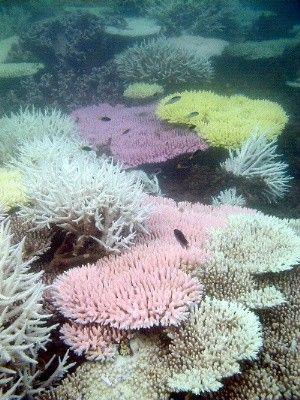
Increasing carbon dioxide emissions could leave species such as coral and sea urchins struggling to survive by the end of the century because they are making the oceans more acidic.

Research by British scientists has found that rising carbon emissions will alter the biodiversity of the seas profoundly. Greater concentrations of carbon dioxide in the atmosphere mean that more of the gas becomes dissolved in seawater, increasing its acidity.

The research team was the first to use natural underwater carbon dioxide vents to assess how acidity caused by the gas influences sea life. “Our field studies provide a window on the future of the oceans in a high CO2 world,” Dr Hall-Spencer from the University of Plymouth.

“We show the dramatic ecological consequences of ocean acidification including the removal of corals, snails and sea urchins and the proliferation of invasive alien algae. Our observations verify concerns, based on laboratory experiments and model predictions, that marine food webs will be severely disrupted and major ecological tipping-points are likely if human CO2 emissions continue unabated.”

Oil Change International | Data Driven, People Powered.
Donate Get Updates
Back to the top
  • Keep in touch
  • Oil Change International
    714 G St. SE, #202
    Washington, DC 20003
    United States

    +1.202.518.9029

    [email protected]

    • Bluesky (opens in a new window)
    • Twitter (opens in a new window)
    • Instagram (opens in a new window)
    • LinkedIn (opens in a new window)
    • Facebook (opens in a new window)
  • Quick links
  • About OCI
  • Our Values
  • Jobs at OCI
  • Ways to Give
  • Media Centre
  • Publications
  • Press
  • Associated websites
  • Big Oil Reality Check
  • Energy Finance Database
  • Permian Climate Bomb
  • Site map
  • Privacy policy
  • Accessibility statement

Copyright © 2026 Oil Change International. Web design by Fat Beehive