
Ending Subsidies or Shifting Blame?
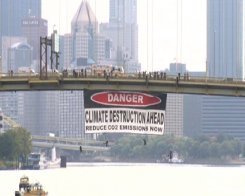 So the political road-show moves from the UN up to the G20 at Pittsburgh, where climate and the banking crisis will be on the table.
And so will a discussion about ending fossil fuel subsidies.
For years campaigners have been arguing for the ending of the tax breaks and other incentives given to the fossil fuel lobby and any political moves on this have to be welcomed.
But Steve’s great analysis last week of what Obama is proposing is worth looking at again, as the mainstream press begins to pick up on the story, and largely misses the point.
As Steve wrote: “Eliminating fossil fuel subsidies is a great idea, if it’s done right. This is certainly the right time, but the G20 is likely not the right place.”
There are two types of subsidies, as Steve explained: “Generally, subsidies are either on the production side (making the cost of production cheaper), or the consumption side (making the price of fuel cheaper to the consumer). In the US and the rest of the industrialized world, we generally have production subsidies, which also serve as corporate welfare to the oil and coal industry who return the favor with lavish campaign contributions. But in the developing world, consumption subsidies, which make access to energy and fuel affordable to the poor, are far more common.”
On the surface it looks as if the Obama Administration is going to target production subsidies. As the Guardian writes: Obama is proposing “a gradual elimination of the tax breaks, cheap loans and other measures extended to oil, gas, coal and electricity producers. The White House said elimination of the subsidies would be a “significant downpayment” to ending global warming.”
But a closer look shows that consumption subsidies are also up for discussion “An end to the subsidies would bring world leaders into conflict with powerful fossil fuel lobbies as well as developing nations where the subsidies make fuel affordable.”
Mike Froman, the national security adviser for international economic affairs, whose memo was leaked last week, has been quoted as singling out developing countries which spend more than 1% of GDP on fossil fuel subsidies
Other press reports talk of the need to target energy subsides in non-OECD countries, such as China, India, Brazil and Russia.
Obama is not looking for unilateral action, but multi-lateral action by the G20. But a first step could be starting at home. According to a recent analysis by the Environmental Law Institute, the US gave out $72 billion to oil, gas and coal companies between 2002 and 2008.
But by talking about multi-lateral action especially of non OECD countries, as Steve pointed out “It shifts blame for the looming potential failure in Copenhagen to China, Russia, India, and others, and away from the U.S. and Europe.”
And as Business Insider magazine asks about the chances of domestic action: “Will Obama actually scrap fossil fuel subsidies? We highly doubt it.”