
Skip to content
Oil Change International | Data Driven, People Powered. Oil Change International | Data Driven, People Powered.
  • About
    • Our Work
    • Values
    • Team
    • Jobs at OCI
    • Ways to Give
  • Program Areas
    • Africa
    • Asia
    • North Sea
    • United States
    • Global Industry
    • Global Public Finance
    • Global Policy
  • Latest
    • Blog
    • Podcast
    • Press Releases
    • Shell Shocked Land
  • Press Releases
  • Publications
Donate
  • Get Updates
    • Share on Bluesky Share on Bluesky Bluesky (opens in a new window)
    • Share on Twitter Share on Twitter Twitter (opens in a new window)
    • Share on Instagram Share on Instagram Instagram (opens in a new window)
    • Share on LinkedIn Share on LinkedIn LinkedIn (opens in a new window)
    • Share on Facebook Share on Facebook Facebook (opens in a new window)
Donate
  • About
    • Our Work
    • Values
    • Team
    • Jobs at OCI
    • Ways to Give
  • Program Areas
    • Africa
    • Asia
    • North Sea
    • United States
    • Global Industry
    • Global Public Finance
    • Global Policy
  • Latest
    • Blog
    • Podcast
    • Press Releases
    • Shell Shocked Land
  • Press Releases
  • Publications
    • Get Updates
    • Share on Bluesky Bluesky
    • Share on Twitter Twitter
    • Share on Instagram Instagram
    • Share on LinkedIn LinkedIn
    • Share on Facebook Facebook
Go to OCI Homepage
Current Affairs
Published: May 08, 2008

Koalas at Risk from Climate Change
  • Latest from OCI
  • Blogs listing
  • Koalas at Risk from Climate Change
    • Australia Climate impacts Current Affairs impact on wildlife
Andy Rowell

When not blogging for OCI, Andy is a freelance writer and journalist specializing in environmental issues.

[email protected]

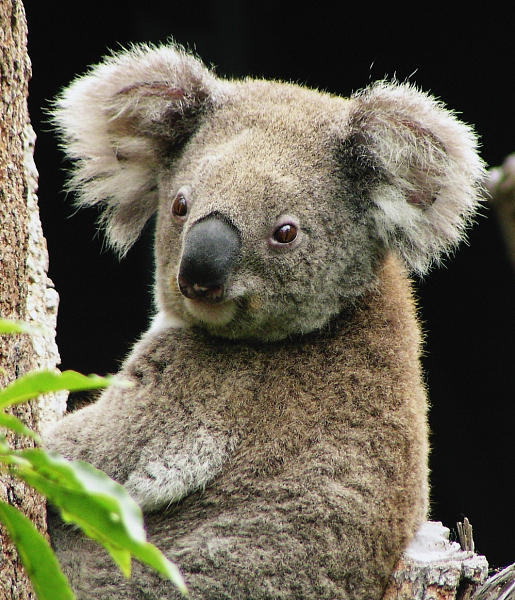
First it was the polar bear, now its the Koala. Both are threatened by climate change.  The bears are threatened by the rising level of carbon dioxide in the atmosphere because it saps nutrients from the eucalyptus leaves they feed on.

According to Ian Hume, emeritus professor of biology at Sydney University, the amount of toxicity in the leaves of eucalyptus saplings rose when the level of carbon dioxide within a greenhouse was increased.

Hume presented his research on the effects of carbon dioxide on eucalyptus leaves to the Australian Academy of Science in Canberra yesterday.  Hume estimated that current levels of global carbon dioxide emissions would result in a noticeable reduction in Australia’s koala population in 50 years due to a lack of palatable leaves.

The Koalas existence is already quite fragile. They sleep for 20 hours a day and then have four hours to do everything else, including eating and mating.  “Koalas produce one young each year under optimal conditions, but if you drop the nutritional value of the leaves, it might become one young every three or four years,” Hume said.

20 hours sleep a day…. it’s a tough life…

Oil Change International | Data Driven, People Powered.
Donate Get Updates
Back to the top
  • Keep in touch

  • Oil Change International
    714 G St. SE, #202
    Washington, DC 20003
    United States

    +1.202.518.9029

    [email protected]

    • Share on Bluesky Bluesky (opens in a new window)
    • Share on Twitter Twitter (opens in a new window)
    • Share on Instagram Instagram (opens in a new window)
    • Share on LinkedIn LinkedIn (opens in a new window)
    • Share on Facebook Facebook (opens in a new window)
  • Quick links

  • About OCI
  • Our Values
  • Jobs at OCI
  • Ways to Give
  • Media Centre

  • Publications
  • Press
  • Associated websites

  • Big Oil Reality Check
  • Energy Finance Database
  • Permian Climate Bomb
  • Site map
  • Privacy policy

Copyright © 2026 Oil Change International. Web design by Fat Beehive