
Skip to content
Oil Change International | Data Driven, People Powered.
  • About
    • Our Work
    • Values
    • Team
    • Jobs at OCI
    • Ways to Give
  • Program Areas
    • Africa
    • Asia
    • North Sea
    • United States
    • Global Industry
    • Global Public Finance
    • Global Policy
  • Latest
    • Blog
    • Podcast
    • Press Releases
    • Shell Shocked Land
  • Press Releases
  • Publications
Donate
  • Get Updates
    • Bluesky (opens in a new window)
    • Twitter (opens in a new window)
    • Instagram (opens in a new window)
    • LinkedIn (opens in a new window)
    • Facebook (opens in a new window)
Donate
  • About
    • Our Work
    • Values
    • Team
    • Jobs at OCI
    • Ways to Give
  • Program Areas
    • Africa
    • Asia
    • North Sea
    • United States
    • Global Industry
    • Global Public Finance
    • Global Policy
  • Latest
    • Blog
    • Podcast
    • Press Releases
    • Shell Shocked Land
  • Press Releases
  • Publications
    • Get Updates
    • Share on Bluesky Bluesky
    • Share on Twitter Twitter
    • Share on Instagram Instagram
    • Share on LinkedIn LinkedIn
    • Share on Facebook Facebook
Go to OCI Homepage
Current Affairs
Published: March 24, 2010

Oil Reserves “Exaggerated by One Third”
  • Latest from OCI
  • Blogs listing
  • Oil Reserves “Exaggerated by One Third”
    • Current Affairs Oil oil reserves OPEC Peak Oil
Andy Rowell

When not blogging for OCI, Andy is a freelance writer and journalist specializing in environmental issues.

[email protected]

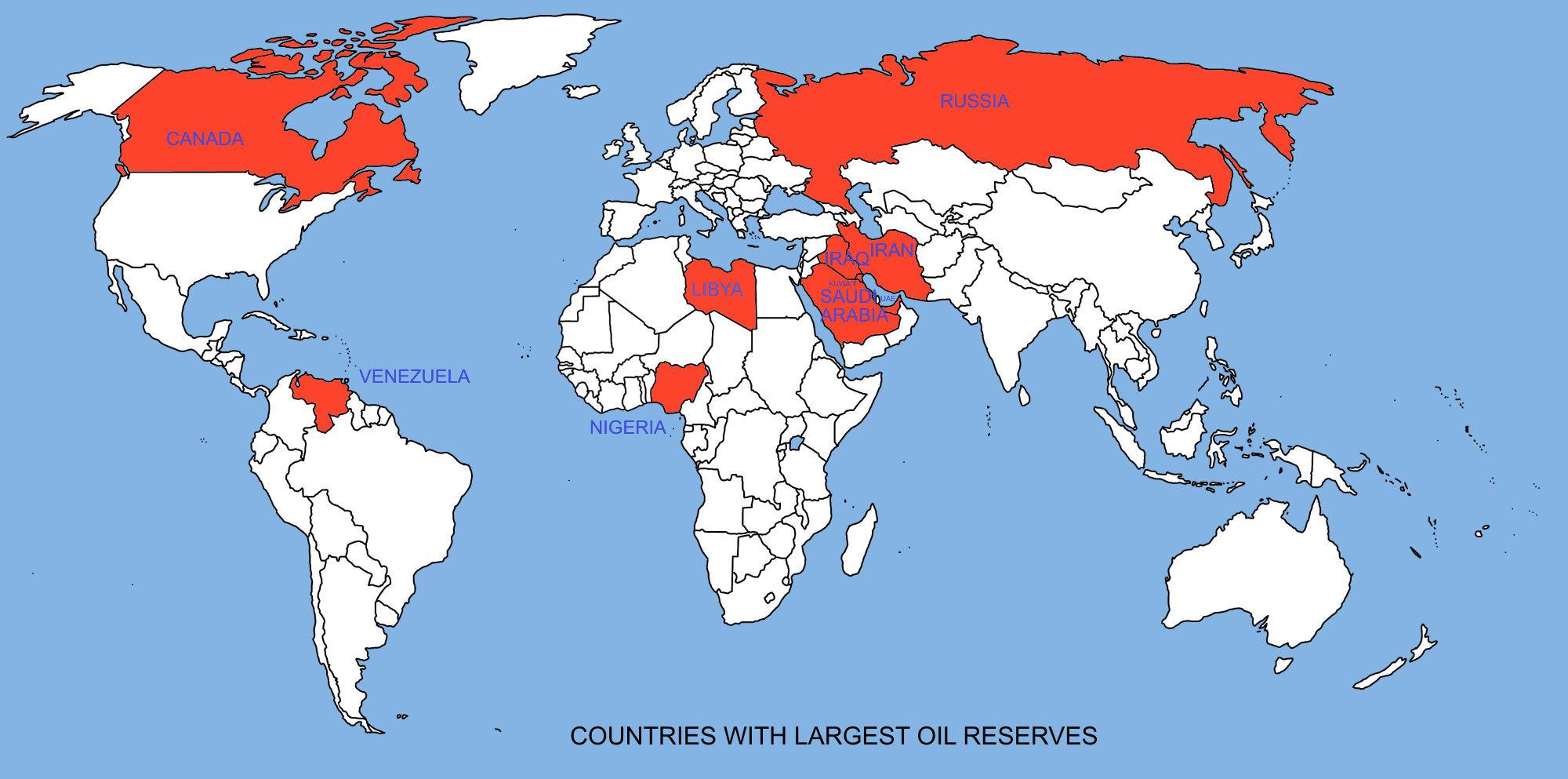
oil_reserves_by_countryBack to the peak oil debate. We could reach peak oil much faster than predicted, according to Sir David King, the British Government’s former chief scientist, who has warned of shortages and price spikes within years.

King argues that the world’s oil reserves have been exaggerated by up to a third.  

King, along with researchers from Oxford University, argue that OPEC over-reported its reserves back in the eighties when competing for market share and therefore the official figures are inflated.

Their new research argues that estimates of conventional reserves should be downgraded from 1,150bn to 1,350bn barrels to between 850bn and 900bn barrels.
Because of this, demand may outstrip supply as early as 2014, they argue.

Although it is well known that OPEC is likely to have inflated its reserves, none of the official reserve estimates undertaken by the International Energy Agency (IEA), BP, the Energy Information Administration and World Oil do not take this into account.

“It is necessary to investigate ambiguities and sources of error that are broadly acknowledged but not taken into account in public data due to political sensitivities,” the researchers said.

The paper also raises concerns that public statistics have started to incorporate non-conventional reserves such as the Canadian tar sands, which are much more difficult to extract and which may never be economically viable.

Sir David: It’s critically important that reserves have been overstated, and if you take this into account, we’re talking supply not meeting demand in 2014-2015.”

Slowly these warnings are being heeded. Two days ago the British Energy minister held a summit to “calm rising fears over peak oil”.

At last politicians are taking notice, but what they do about it will be the million-dollar question…

Oil Change International | Data Driven, People Powered.
Donate Get Updates
Back to the top
  • Keep in touch
  • Oil Change International
    714 G St. SE, #202
    Washington, DC 20003
    United States

    +1.202.518.9029

    [email protected]

    • Bluesky (opens in a new window)
    • Twitter (opens in a new window)
    • Instagram (opens in a new window)
    • LinkedIn (opens in a new window)
    • Facebook (opens in a new window)
  • Quick links
  • About OCI
  • Our Values
  • Jobs at OCI
  • Ways to Give
  • Media Centre
  • Publications
  • Press
  • Associated websites
  • Big Oil Reality Check
  • Energy Finance Database
  • Permian Climate Bomb
  • Site map
  • Privacy policy
  • Accessibility statement

Copyright © 2026 Oil Change International. Web design by Fat Beehive