
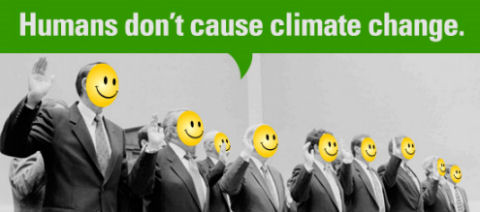
When Ignorance Costs More than Bliss
 Since the election on Tuesday, the chasm between what action is needed on the ground and what our politicians believe just got a whole lot wider.
We all know that it is the poorest people from third world countries who are most at risk from climate change.
And yet half of the new Republicans – the richest and most privileged politicians in the world – deny that man-made climate change is actually happening.
They should read a new report from the UN that warns that years of progress on key indicators such as health and education are at risk because of climate change.
In its annual flagship report on the state of the world, the UN’s annual Human Development Report (HDR), the UN said:
“Climate change may be the single factor that makes the future very different, impeding the continuing progress in human development that history would lead us to expect. While international agreements have been difficult to achieve and policy responses have been generally slow, the broad consensus is clear: climate change is happening, and it can derail human development.”
The UN continued: “The divide between developed and developing countries persists: a small subset of countries has remained at the top of the world income distribution, and only a handful of countries that started out poor have joined that high-income group”, the report said. “The gap in human development across the world, while narrowing, remains huge.”
The gap between what is happening on the ground and the lack of understanding of the issue on newly elected Republicans is also huge.
A ThinkProgress investigation has found that of the GOP freshman, 86% are opposed to any climate change legislation that increases government revenue and 50% deny the existence of manmade climate change.
New members include William Marcy (MS-2) — who warns of “Global Warming Environmental Terrorists” — and Kristi Noem (SD-AL South Dakota, At-Large) — who voted for a resolution that “astrological” and “thermological” dynamics “effect” the weather.
The U.S. House of Representatives now only has four Republicans who publicly admit that climate change is real and man-made.
Ironically is the climate deniers won’t listen to the UN, maybe they will listen to the world’s leading energy watch-dog, which next week throws its weight behind calls for governments to implement pledges to fight climate change and cut fossil fuel subsidies, warning that a failure to do so would significantly inflate oil prices.
The IEA forecasts that implementation of new environmental policies would see demand for oil almost 10 per cent lower by 2035 than under current policy commitments. That would result in prices roughly $20 a barrel lower.
“The message from this analysis is clear: the weaker and slower the response to the climate challenge, the greater the risk of oil scarcity and the economic cost for consuming countries,” says the IEA.
So the message to the deniers – ignorance is not bliss. It will cost you money.
Elsewhere, in the third world, it may cost someone much, much more.