
Crude-by-Rail may grow 4-fold. Are we all comfortable with that?
Ten years from now we could be seeing over four times more crude oil transported by rail throughout the US and Canada, some 4.5 million barrels per day. Are we comfortable with that?
Read the latest insights and analysis from the experts at Oil Change International.
Ten years from now we could be seeing over four times more crude oil transported by rail throughout the US and Canada, some 4.5 million barrels per day. Are we comfortable with that?
As the European Commission continues to deliberate as to whether to adopt its landmark climate change legislation, called the Fuel Quality Directive (FQD), there is increasing evidence that planned pipelines in North America could turn Europe into a significant market for the Canadian tar sands.
And on it goes. One accident after another. But this time a major disaster was averted by a whisker. On Monday a freight train, which was carrying fracked and highly flammable shale oil from North Dakota, derailed on a bridge over the Schuylkill river in South Philadelphia.
According to a report commissioned for the hearings into health impact caused by the tar sands, some local doctors are reluctant to treat patients who draw connections between the industry and their personal health problems.
The string of oil by rail accidents in recent weeks has forced regulators in both Canada and the US to re-appraise the safety of oil by rail.
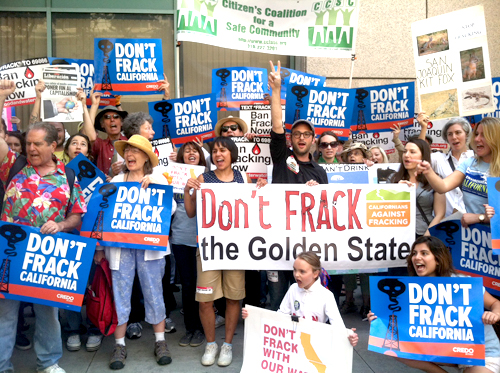
If the Governor were to be truly serious about protecting Californians struggling with the drought, he would put a halt to fracking in the state immediately.
Rock legend Neil Young continued his week-long “Honor the Treaties” tour of Canada yesterday by likening the tar sands to a war zone.
The British Prime Minister, David Cameron, yesterday dismissed critics of fracking as “irrational”, arguing that their opposition is based on a “religious” hostility to fossil fuels.
Another day and yet another crude oil train derails in North America, highlighting the growing risk of carrying crude by rail.