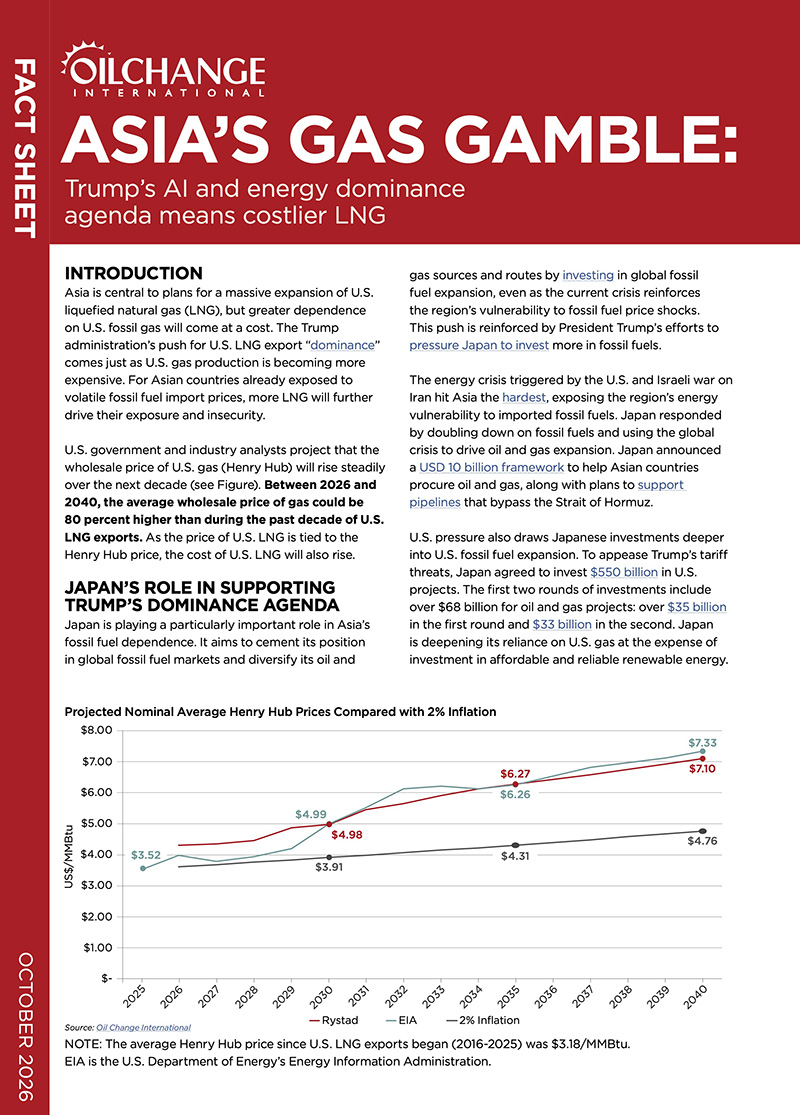
U.S. Gas Prices Are Rising
The expected surge in U.S. LNG exports could coincide with rapid growth in domestic U.S. gas demand. The Trump administration’s energy dominance and artificial intelligence (AI) agendas have triggered a massive wave of LNG export facility and data center construction. Planned data centers are overwhelmingly tied to gas power plant expansion. U.S. LNG exports, already the world’s largest, could double by the early 2030s and continue to grow, while gas demand for power generation is estimated to increase 50 percent in the coming decade.
Meeting rising demand will push gas producers to invest in costlier production than before. The U.S. gas boom is entering its third decade, and the regions that have met most gas demand to date will not be able to meet the coming surge on their own. To raise gas production to expected levels, drilling will need to increase in the Haynesville region, where gas lies deeper and in more technically challenging geology. Higher drilling costs mean this will happen only if prices rise.
Japanese companies, including Mitsubishi, JERA, Osaka Gas, and Tokyo Gas, have made substantial investments in the costly Haynesville gas region as part of a strategy to own more of the U.S. LNG supply chain. This positions them to benefit from rising gas prices, hedging against lower profits from trading LNG.
However, this creates deeper fossil fuel lock-in. Japanese capital is expanding the U.S. gas system even as the underlying cost of producing U.S. gas is projected to rise. Investments in upstream gas production, LNG supply, and other U.S. gas infrastructure mean Japanese companies could maintain high levels of gas production, trade, and consumption, even as consumer costs rise. While supply chain integration may protect these companies’ profits from rising U.S. LNG costs, this risky strategy could leave Asian consumers footing the bill.
Japan is pouring public finance into projects that the country’s largest private banks cannot finance in dollars. Japan should avoid tying its long-term energy strategy and public financial support to an increasingly expensive fossil fuel supply chain and redirect investment toward reducing gas demand and accelerating the renewable energy transition at home and across Asia.