
Skip to content
Oil Change International | Data Driven, People Powered.
  • About
    • Our Work
    • Values
    • Team
    • Jobs at OCI
    • Ways to Give
  • Program Areas
    • Africa
    • Asia
    • North Sea
    • United States
    • Global Industry
    • Global Public Finance
    • Global Policy
  • Latest
    • Blog
    • Podcast
    • Press Releases
    • Shell Shocked Land
  • Press Releases
  • Publications
Donate
  • Get Updates
    • Bluesky (opens in a new window)
    • Twitter (opens in a new window)
    • Instagram (opens in a new window)
    • LinkedIn (opens in a new window)
    • Facebook (opens in a new window)
Donate
  • About
    • Our Work
    • Values
    • Team
    • Jobs at OCI
    • Ways to Give
  • Program Areas
    • Africa
    • Asia
    • North Sea
    • United States
    • Global Industry
    • Global Public Finance
    • Global Policy
  • Latest
    • Blog
    • Podcast
    • Press Releases
    • Shell Shocked Land
  • Press Releases
  • Publications
    • Get Updates
    • Share on Bluesky Bluesky
    • Share on Twitter Twitter
    • Share on Instagram Instagram
    • Share on LinkedIn LinkedIn
    • Share on Facebook Facebook
Go to OCI Homepage
Current Affairs
Published: August 13, 2010

Ability to Find New Reserves Now on a “Knife Edge”
  • Latest from OCI
  • Blogs listing
  • Ability to Find New Reserves Now on a “Knife Edge”
    • BP Current Affairs Oil Oil industry oil reserves oil spills
Andy Rowell

When not blogging for OCI, Andy is a freelance writer and journalist specializing in environmental issues.

[email protected]

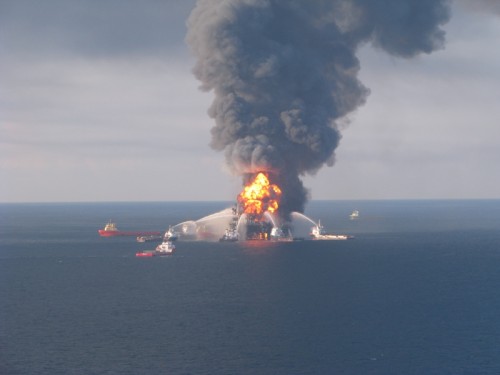
deepwaterhorizononfireWell we always knew that the oil spill disaster would have severe repercussions for the industry, a fact now conceded by the International Energy Agency (IEA).

The IEA has warned that the spill from BP’s Macondo’s well “places the ability of the industry to access important new reserves on a knife edge“.

Its latest monthly oil market report adds: “Some 30 per cent of existing global oil, and nearly 50 per cent of new supplies by 2015, needs to be sourced from offshore, much of it from deep water.”

The IEA has raised its “lost oil” production estimate due to drilling restrictions from 60,000 barrels a day this year to 100,000 barrels a day in 2011.

However, in good news for the industry, the IEA said that “fortunately” few oil-rich countries’ governments were considering blanket bans on deepwater development inthe wake of the Deepwater disaster, just that regulations would be tightened.

“Operating and regulatory standards may be tightened, and sensitive frontier areas may see permitting delays,“ it added.

So the disaster has tightened the rules of the game, it hasn’t completely changed the game.

As I have noted before, BP is one of the few companies with the financial muscle to be able to withstand the billions it will pay out in fines and compensation.

So the IEA has warned that the legislation is currently being considered in the US that could increase the financial liabilities so much that small and medium-sized oil companies are driven out of deep water development altogether.

The IEA warned that legislation resulting from the oil spill “will need to balance project oversight, enforcement and operating standards on the one hand with continued deepwater access and supply security on the other”.

And it is that balance that had gone completely wrong before the disaster.

Oil Change International | Data Driven, People Powered.
Donate Get Updates
Back to the top
  • Keep in touch
  • Oil Change International
    714 G St. SE, #202
    Washington, DC 20003
    United States

    +1.202.518.9029

    [email protected]

    • Bluesky (opens in a new window)
    • Twitter (opens in a new window)
    • Instagram (opens in a new window)
    • LinkedIn (opens in a new window)
    • Facebook (opens in a new window)
  • Quick links
  • About OCI
  • Our Values
  • Jobs at OCI
  • Ways to Give
  • Media Centre
  • Publications
  • Press
  • Associated websites
  • Big Oil Reality Check
  • Energy Finance Database
  • Permian Climate Bomb
  • Site map
  • Privacy policy
  • Accessibility statement

Copyright © 2026 Oil Change International. Web design by Fat Beehive