
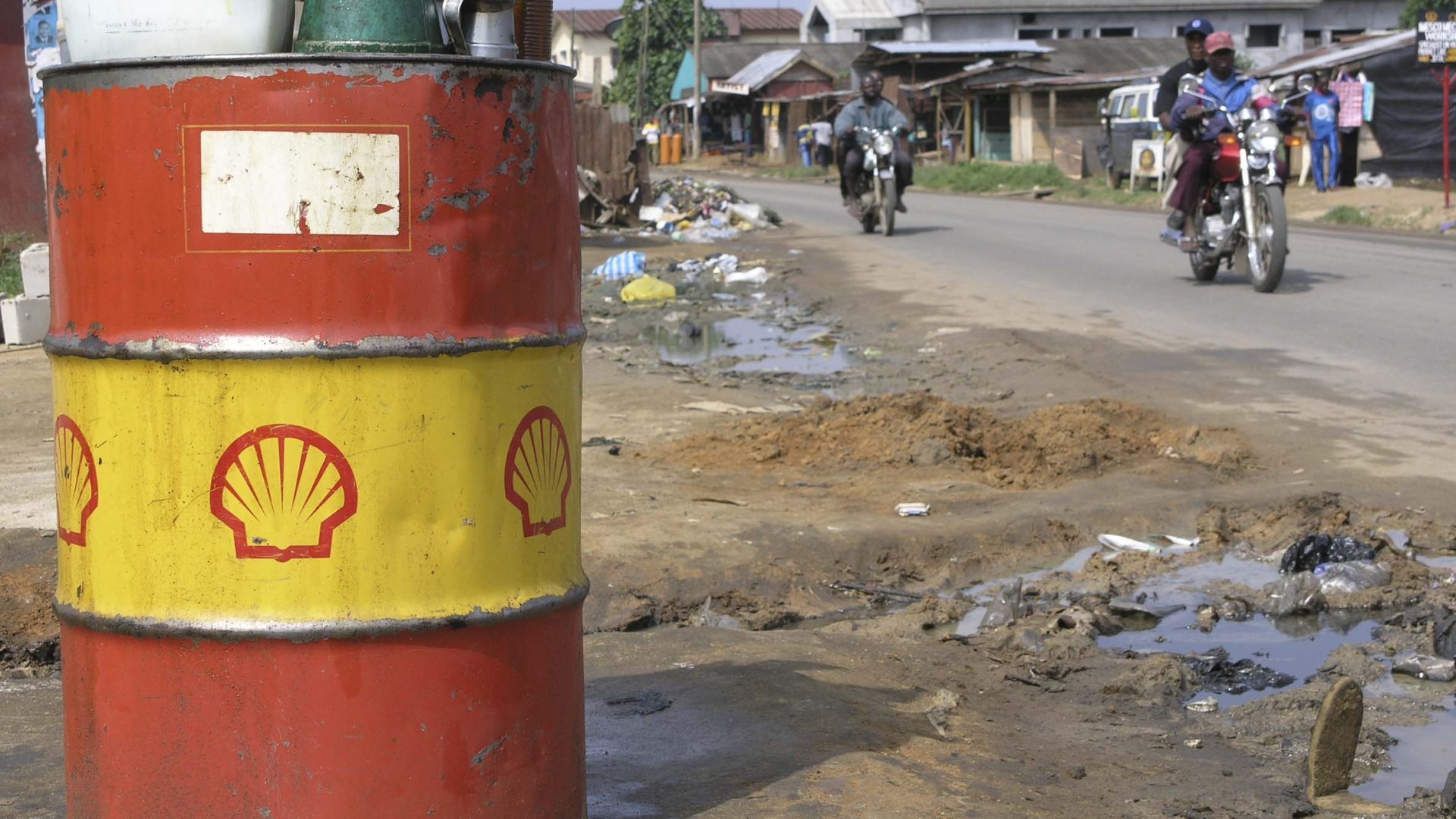
Explosive new documents reveal Shell’s “collusion, nepotism and corruption” in the Niger Delta & bolster claims the company divested to avoid paying US$10.9bn in clean up costs.
They say the truth will come out. It might take years or decades, but finally the truth will eventually come out. For decades, in what has become a multi-generational fight, the communities of the Niger Delta have fought Shell for its rampant pollution and environmental devastation.
They say the truth will come out. It might take years or decades, but finally the truth will eventually come out. For decades, in what has become a multi-generational fight, the communities of the Niger Delta have fought Shell for its rampant pollution and environmental devastation.
Shell, which started drilling in Nigeria in the fifties, has faced decades of resistance from the communities of the Delta, most notably, the Ogoni. They faced a ferocious backlash. The famous Nigerian writer Ken Saro-Wiwa was murdered along with eight colleagues in 1995 for their campaign against Shell. Thousands of Ogoni were killed, raped, or tortured. There are intergenerational scars and trauma.
Shell has always seen the Niger Delta as a public relations problem rather than one where it should act responsibly, clean up, and pay for its pollution.
As the company has wriggled to avoid its responsibilities, the communities have turned to the courts in the US, the Netherlands, and the UK, to try and secure justice.
The new documents stem from a legal case brought by two Nigerian communities, Bille and Ogale, against Shell in the UK. The communities are claiming that Shell failed to prevent and then remediate devastating oil pollution over many years. The case is due to be heard in March 2027.
The documents, which are released in a new report called Nigeria: Lifting the Lid published by Amnesty and others, once again reveal the true scale of Shell’s unethical behaviour in the country.
Many of the documents – which include email exchanges between senior executives and confidential audits and presentations – reveal shocking insights into Shell’s operations.
Once again, the documents reveal that Shell was trying to spin the story. One document called for “continuous Government and international media engagements”. Another noted how the company was planning the “best media campaign” to “counter” claims the company was “complicit” in bunkering. A third highlighted how Shell would “support” an investigative reporter with data and logistical support for a story.
While Shell presented its operations as meeting global standards, the documents point to concerns raised by the Nigerian army over alleged complicity in oil theft, suspected staff and contractor collusion, exemptions from safety standards, chronic neglect of known pipeline integrity risks, missing well data, weak leak detection and flawed spill assessments.
For decades, Shell has said that its Nigerian operations adhered to its global guidelines, but the documents show otherwise. The documents show that Shell exempted the SPDC from key elements of its global health and safety standards so oil could continue flowing through tampered pipelines, even when not deemed safe under Shell’s own safety rules.
One of the long-standing complaints by the communities has been over rampant pollution. Nigeria has historically been a problem for Shell. An independent analysis carried out by the Oil Spill Intelligence Report of Shell’s oil spills found that in the eighties and early nineties, 40 percent of the spills from Shell’s global operations were in Nigeria.
Shell’s standard response has always been that the pollution was caused by sabotage. However, these new documents vindicate the long-standing community complaints that a significant cause of the pollution lies in Shell’s failure to properly maintain the vast network of wells and pipelines operated by its then subsidiary, the Shell Petroleum Development Company (SPDC).
Instead of cleaning up its aging and polluting pipelines, Shell kept the oil flowing. Rather than face the enormous cost of clean-up and decommissioning, estimated at over US$10 billion (or $14 billion today), Shell decided to sell up. Shell later sold SPDC to Renaissance Africa Energy in 2025, even loaning Renaissance $1.2 billion. The documents reveal that the decision to sell was influenced by the desire to avoid decommissioning and clean-up costs. At the time I wrote that Shell was “shirking responsibility by selling its assets in the Niger Delta”. These documents bear that out.
The documents also show that:
- Even as Shell was blaming illegal tapping of its pipelines by criminal gangs for the bulk of pollution incidents, senior staff permitted tampering to continue – leading the Nigerian army force to accuse the company of “complicity” in the oil thefts. As a result, communities were exposed to unacceptable pollution.
- Instead of repairing tapped pipelines, as required under Shell’s internal rules, executives allowed taps to be left in place to minimize oil flow disruption – despite being told that this would result in environmental damage. An internal presentation from 2013 was explicit: “Are we comfortable to continue producing, KNOWING that further environmental damage WILL occur?” (capitals as per the original).
- The documents confirm that some of Shell’s pipelines were old and not being maintained in line with Shell guidelines;
- The company had apparently even lost track of data relating to the location and condition of hundreds of its oil wells. SPDC subsequently launched a “well hunt campaign” in 2014 to identify them all.
- Shell failed to take adequate measures to protect pipelines against oil theft. A 2011 review found SPDC’s security operations to be “seriously flawed”.
- Shell executives assumed its staff and contractors were likely involved in oil theft – which is known in Nigeria as “bunkering,” and Shell executives knew its rules were being broken by staff. One Shell manager emailed in 2012, after visiting Nigeria, that: “there is collusion, nepotism and corruption running through the veins of [SPDC]………the fact is no one bats an eyelid here. Shell’s Code of Conduct is an inconvenience here: it’s completely ignored.”
Shell must now answer for decades of pollution in the Niger Delta. “Shell cannot be allowed to take the oil, take the profits and leave the pollution behind. Communities in the Niger Delta deserve truth, justice, clean-up and full remedy,” says Olanrewaju Suraju, Chairman of the HEDA Resource Centre, a Nigerian governance and environmental justice NGO.
Amnesty International and partner organizations are calling on Nigerian authorities to overhaul its oil industry oversight, require accessible audits of all operational and decommissioned infrastructure, and establish a properly resourced Niger Delta clean-up superfund.
Isa Sanusi, the country director for Amnesty in Nigeria, added. “UK and Dutch authorities must investigate whether Shell misled shareholders, regulators and affected communities about the true state of its operations and liabilities. Shell must stop hiding behind divestment, disclose the truth, fund clean-up and remedy, and ensure that affected communities finally receive justice.”