
“We Get All the Risks and None of the Benefits”: Texas Community Leaders Confront Japanese Financiers of a Dangerous LNG Project In Their Town
This May, community leaders from Freeport, Texas, flew to Tokyo to hold Japanese financiers accountable for funding a dangerous liquefied natural gas (LNG) export project in their town.
This May, community leaders from Freeport, Texas, flew to Tokyo to hold Japanese financiers accountable for funding a dangerous liquefied natural gas (LNG) export project in their town.
Japan is one of the world’s largest financial backers of liquefied natural gas projects. From the Philippines to Texas, these projects have spread toxic pollution, devastated local fishing economies, and contributed to the climate crisis. Japan funds these projects to acquire energy for its own use – and make major profits by reselling the gas to other countries in Asia.
Japan spent $3.7 billion in public money to back the Freeport LNG project. Manning Rollerson Jr. III, the founder of Freeport Haven Project; Gwendolyn Jones, founder of Climate Conversation Brazoria County, and Melanie Oldham, founder of Better Brazoria went to Tokyo to tell Japanese leaders about the harmful impacts of Freeport LNG, and urge them to stop funding LNG projects across the Gulf South and the globe. (Freeport is located in Brazoria County).
While in Tokyo, Rollerson, Jones and Oldham hand-delivered a landmark series of complaints to the whole chain of Japanese project financiers, including public institutions Japan Bank for International Cooperation (JBIC) and Nippon Export and Investment Insurance (NEXI), and megabanks Mitsubishi UFJ Financial Group (MUFG), Mizuho, Sumitomo Mitsui Banking Corporation (SMBC) and power company JERA.
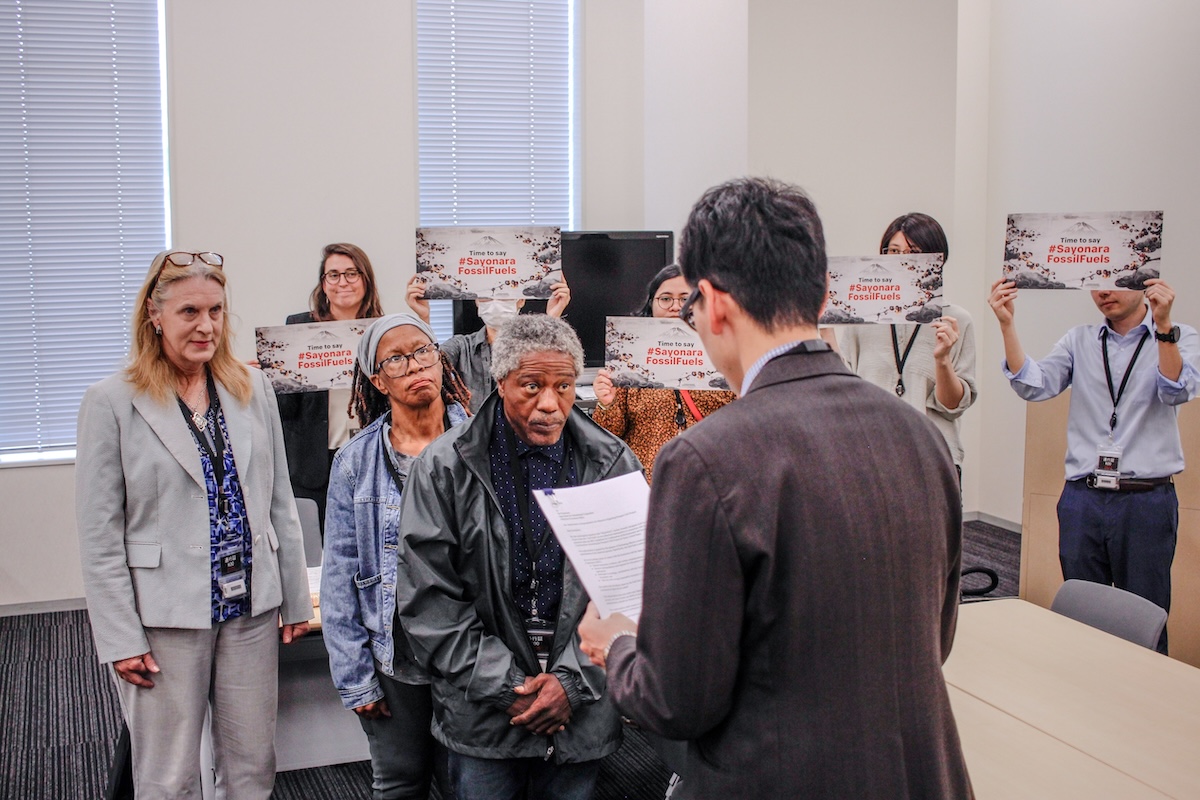
Texas community leader Manning Rollerson Jr. delivers a complaint to a representative of the Japan Bank for International Cooperation, a major financier of U.S. LNG projects.
“Japanese financiers need to know that Freeport LNG is full of risk – for our communities, for our environment, and for their companies. We came to Tokyo to make sure they can no longer look away,” says Jones.
Freeport community leaders sat down with representatives of JBIC, NEXI, the Ministry of Economy, Trade and Industry (METI), and the Ministry of Finance (MoF) to relay their experiences of living in the shadow of the dangerous and toxic gas industry being financed by Japanese institutions. They appealed to financiers to cease funding for Freeport, refuse to finance any expansions of the project, and to look into the violations set into record by the complaints they filed.
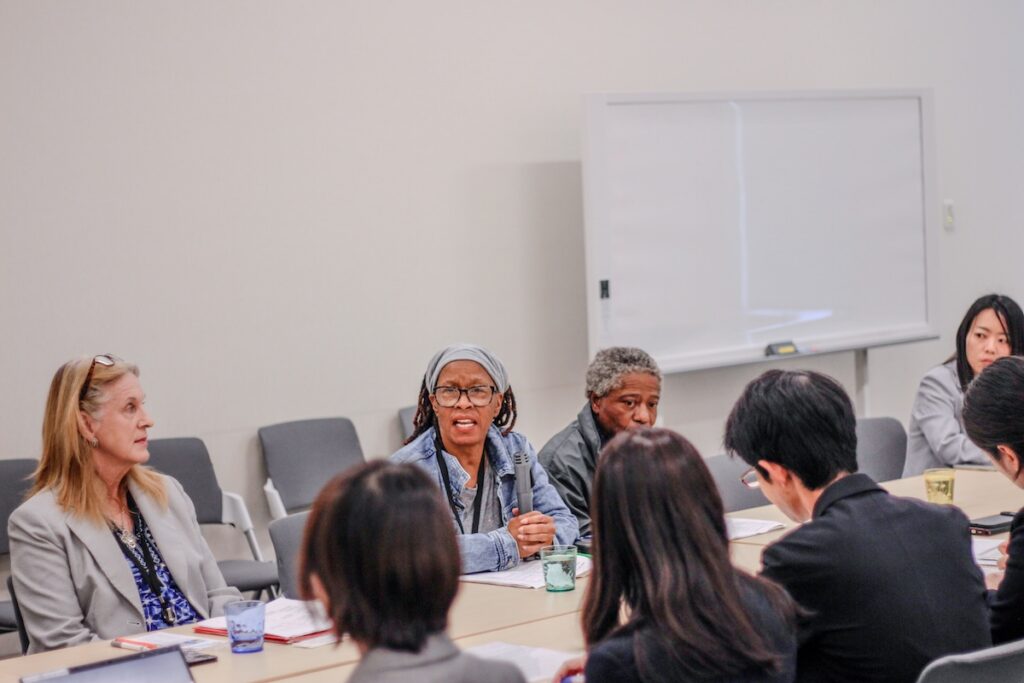
Freeport leaders met with representatives of JBIC, NEXI, METI and MoF to inform them of the harms of Japanese investments in Freeport LNG.
Freeport is a small town of about 13,000 residents, many of whom are low-income or people of color. The county’s air quality has consistently received an “F” grade from the American Lung Association. “We are [treated like] a sacrifice community,” says Oldham. “We get all of the risks and none of the benefits” of projects like Freeport LNG.
Oldham and the community leaders have seen their families and neighbors develop asthma, cancer, and other health issues that research has linked to pollution from LNG export projects and other industrial facilities.
“The Freeport LNG project is poisoning people in my community,” says Rollerson.
In 2022, Rollerson, Oldham, and Jones witnessed Freeport LNG explode, sending a fireball 450 feet into the sky. The explosion injured those nearby and released almost 120,000 cubic feet of LNG. “I’ll never forget the day the Freeport LNG project exploded. It changed the way I look at that facility and the way I feel about the safety of my family and my community,” said Gwendolyn Jones. “No one should have to live with that fear.”
The problems with Freeport LNG are far from isolated. Exposure to harmful pollutants is common for communities near LNG terminals. LNG export terminals also worsen the climate crisis. A report published by Oil Change International and Greenpeace found that any further investment in U.S. LNG export terminals is incompatible with a liveable climate.
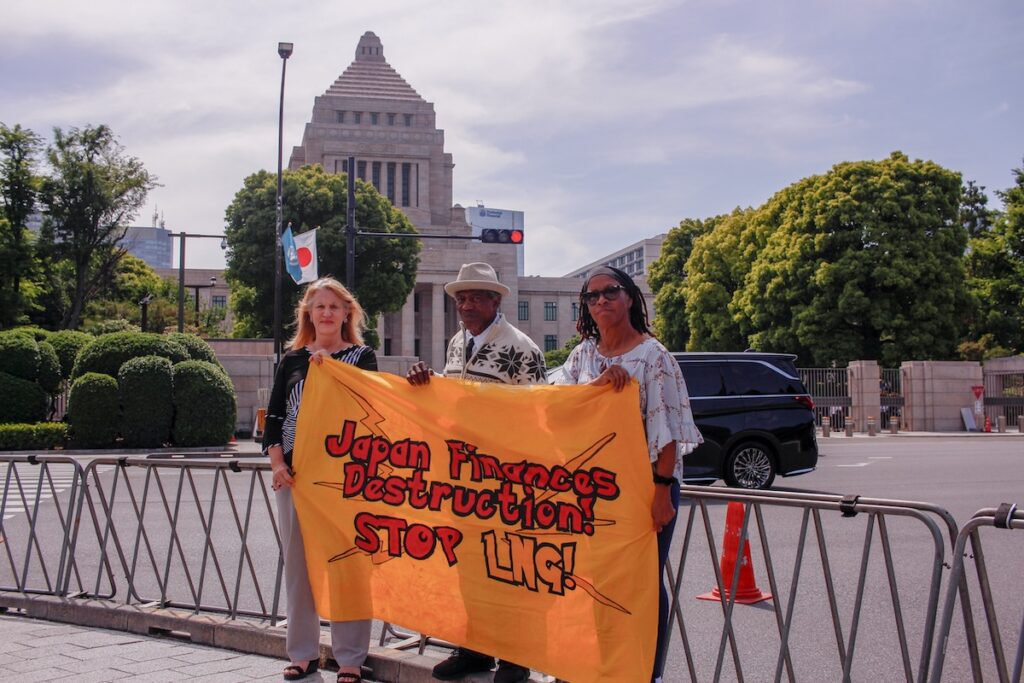
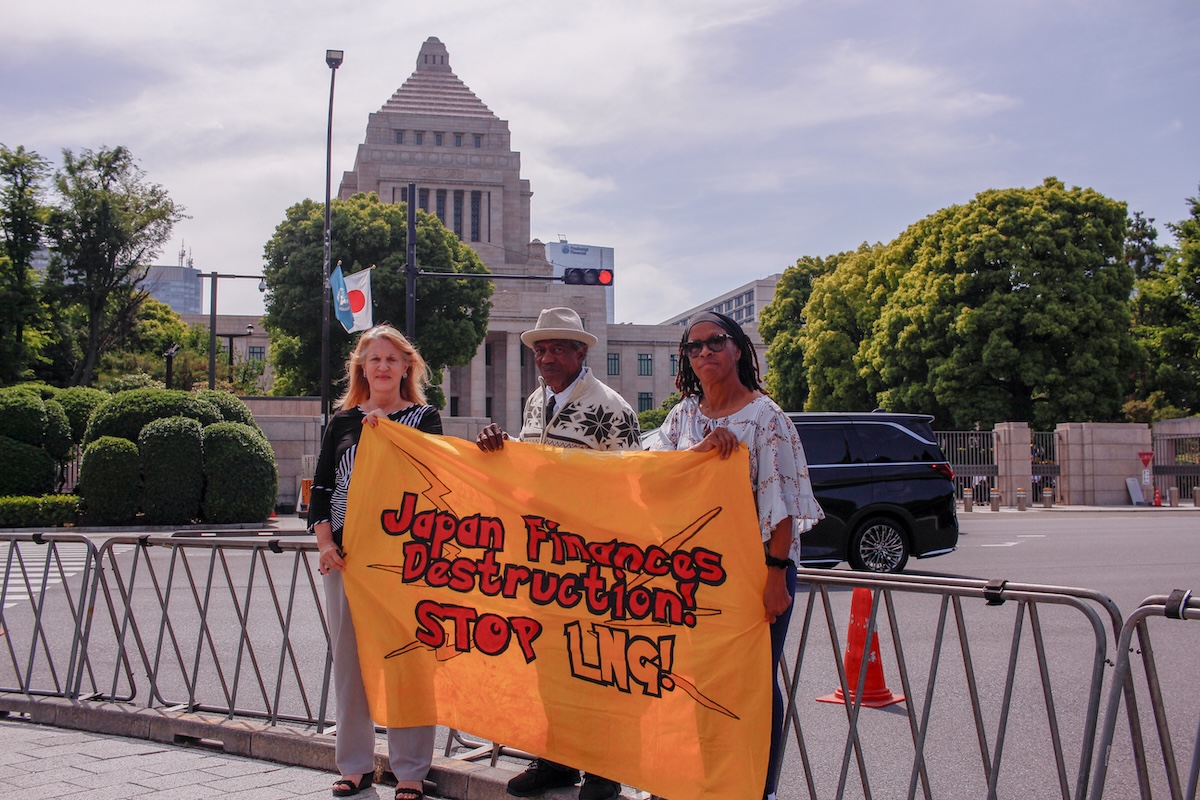
Texas community leaders in front of the Tokyo Diet calling on Japan to stop financing LNG.
The Tokyo visit also put the longstanding concerns of the Freeport community on the floor of the Japanese parliament. Rollerson, Oldham, Jones, alongside Friends of the Earth Japan, met with Japanese parliamentarians to brief them directly on the crisis unfolding in Freeport and asked that this be brought up in official government forums.
Upper House lawmaker Kusuo Oshima spoke in front of Japan’s Finance Committee, questioning why Japanese public money is flowing into a project that has injured residents, contaminated air, and received numerous pollution violations. “We must look at what is actually happening on the ground,” Oshima said.
On a separate occasion, Japanese lawmaker Tomo Iwabuchi spoke about Freeport at the Upper House Budget Committee and demanded that JBIC and NEXI investigate the harm inflicted on Freeport residents and halt support for the project. “LNG development runs counter to global trends. New projects must stop,” Iwabuchi told the committee.
The handover of complaints during the Tokyo trip was the first step in a broader pursuit of accountability. On June 26, groups led by the Asian People’s Movement on Debt and Development delivered a petition signed by nearly 2,000 people demanding that Japanese funders stop bankrolling Freeport LNG and all gas projects. The petition was submitted to the headquarters of MUFG, Mizuho, and SMBC in Manila during the banks’ annual general meetings in Tokyo to ensure that these institutions are made aware of growing opposition to their harmful financing practices.
Groups also held an action in Makati City, the financial district of the Philippines, to warn that the action is just the beginning of a sustained push targeting not only private commercial giants but also Japanese public institutions like JBIC and the Japan International Cooperation Agency (JICA), which continue to underwrite fossil fuel expansion in Asia.
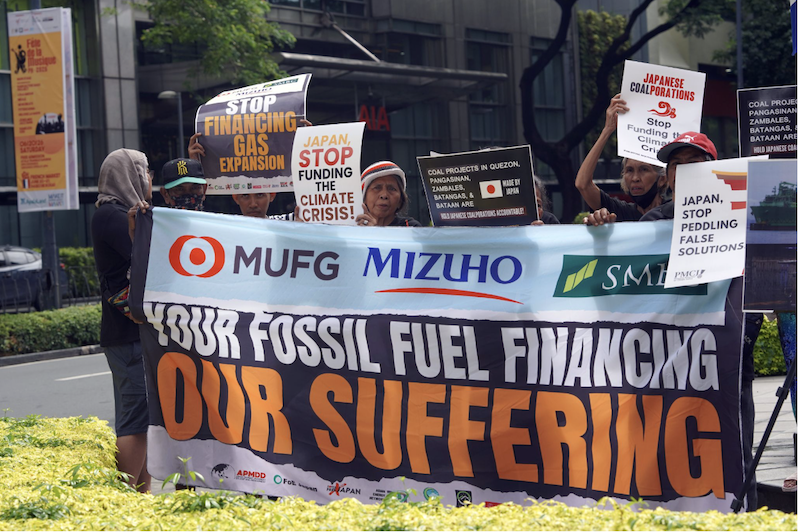
Groups and communities in the Philippines held a protest in Manila to call out Japan’s continued funding of fossil fuel projects that impact their health, environment, and livelihood.
Freeport leaders will continue to pursue every available remedy to hold Japanese financiers accountable for the harm caused by their investments.
“I went to Tokyo to tell Japanese financiers that investing in U.S. LNG is like making a deal with the devil— it’s volatile, risky and undependable. Japanese financiers must listen to those harmed by the projects they fund and stop treating our communities like sacrifice zones,” says Rollerson.
Japanese financiers have heard the testimony of those most impacted by their investment decisions. They have the community leaders’ complaints in their inboxes detailing just how harmful Freeport LNG is. Now, they have a choice. They can launch an investigation into the risks Freeport LNG poses to communities, our climate, and their own portfolios, and decide to stop financing harmful LNG projects – or continue to destroy ecosystems, worsen the climate crisis, and violate people’s right to clean air and water.
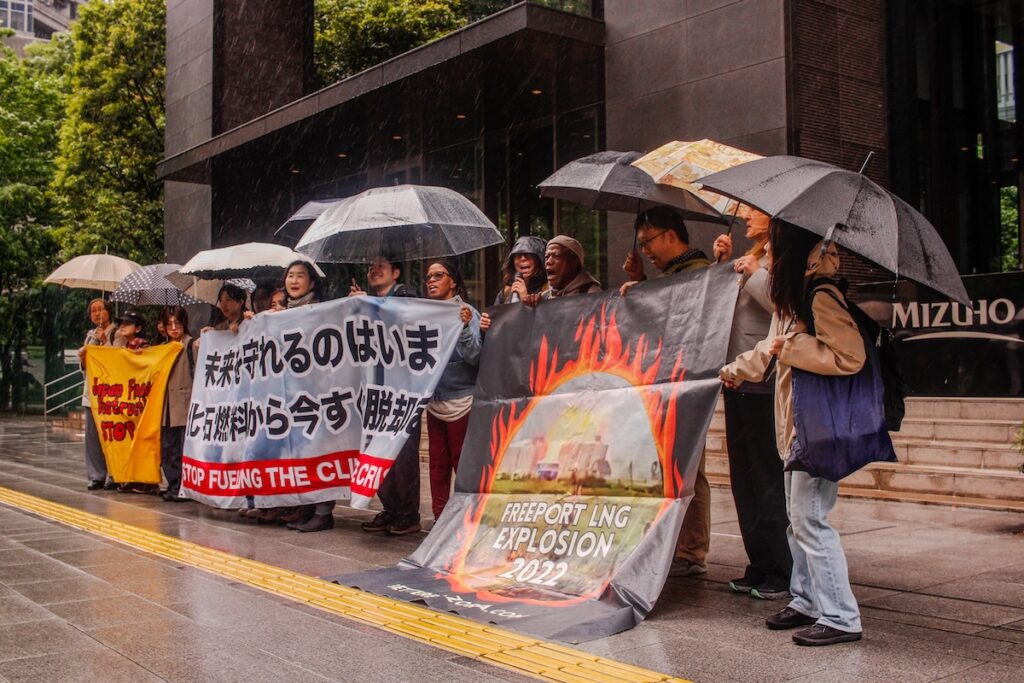
With Japanese civil society organizations, Texas community leaders held protests in front of megabanks’ headquarters in Tokyo.