
Skip to content
Oil Change International | Data Driven, People Powered.
  • About
    • Our Work
    • Values
    • Team
    • Jobs at OCI
    • Ways to Give
  • Program Areas
    • Africa
    • Asia
    • North Sea
    • United States
    • Global Industry
    • Global Public Finance
    • Global Policy
  • Latest
    • Blog
    • Podcast
    • Press Releases
    • Shell Shocked Land
  • Press Releases
  • Publications
Donate
  • Get Updates
    • Bluesky (opens in a new window)
    • Twitter (opens in a new window)
    • Instagram (opens in a new window)
    • LinkedIn (opens in a new window)
    • Facebook (opens in a new window)
Donate
  • About
    • Our Work
    • Values
    • Team
    • Jobs at OCI
    • Ways to Give
  • Program Areas
    • Africa
    • Asia
    • North Sea
    • United States
    • Global Industry
    • Global Public Finance
    • Global Policy
  • Latest
    • Blog
    • Podcast
    • Press Releases
    • Shell Shocked Land
  • Press Releases
  • Publications
    • Get Updates
    • Share on Bluesky Bluesky
    • Share on Twitter Twitter
    • Share on Instagram Instagram
    • Share on LinkedIn LinkedIn
    • Share on Facebook Facebook
Go to OCI Homepage
Current Affairs
Published: February 25, 2008

Antarctic Glaciers “Surge” to Ocean
  • Latest from OCI
  • Blogs listing
  • Antarctic Glaciers “Surge” to Ocean
    • Climate impacts Current Affairs extreme energy melting glaciers
Andy Rowell

When not blogging for OCI, Andy is a freelance writer and journalist specializing in environmental issues.

[email protected]

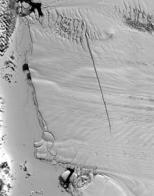
UK scientists working in Antarctica have found some of the clearest evidence yet of instabilities in the ice of part of West Antarctica. If the trend continues, they say, it could lead to a significant rise in global sea level.
The new evidence comes from a group of glaciers covering an area the size of Texas, in a remote and seldom visited part of West Antarctica.
David Vaughan, of the British Antarctic Survey, explained: “It has been called the weak underbelly of the West Antarctic Ice Sheet, and the reason for that is that this is the area where the bed beneath the ice sheet dips down steepest towards the interior. If there is a feedback mechanism to make the ice sheet unstable, it will be most unstable in this region.”
“The measurements from last season seem to show an incredible acceleration, a rate of up to 7%. That is far greater than the accelerations they were getting excited about in the 1990s.” If the glacier does continue to surge and discharge most of it ice into the sea, say the researchers, the Pine Island Glacier alone could raise global sea level by 25cm.
That might take decades or a century, but neighbouring glaciers are accelerating too and if the entire region were to lose its ice, the sea would rise by 1.5m worldwide.

Oil Change International | Data Driven, People Powered.
Donate Get Updates
Back to the top
  • Keep in touch
  • Oil Change International
    714 G St. SE, #202
    Washington, DC 20003
    United States

    +1.202.518.9029

    [email protected]

    • Bluesky (opens in a new window)
    • Twitter (opens in a new window)
    • Instagram (opens in a new window)
    • LinkedIn (opens in a new window)
    • Facebook (opens in a new window)
  • Quick links
  • About OCI
  • Our Values
  • Jobs at OCI
  • Ways to Give
  • Media Centre
  • Publications
  • Press
  • Associated websites
  • Big Oil Reality Check
  • Energy Finance Database
  • Permian Climate Bomb
  • Site map
  • Privacy policy
  • Accessibility statement

Copyright © 2026 Oil Change International. Web design by Fat Beehive