
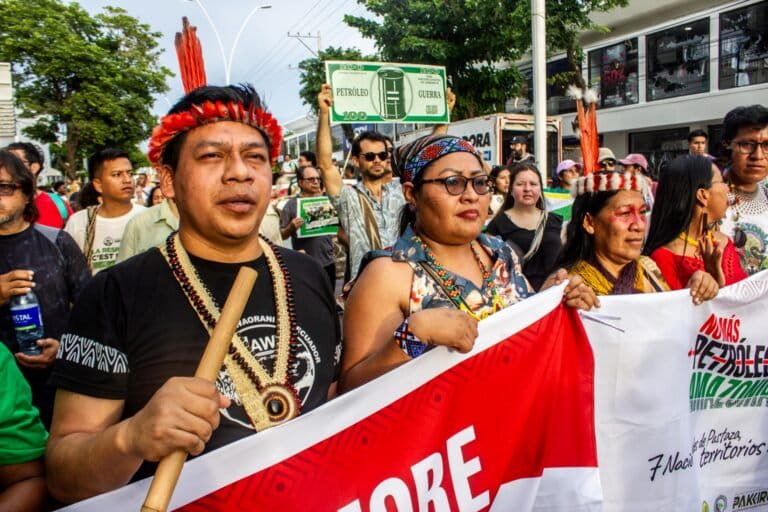
9 Ways We Challenged Fossil Fuel Power in 2026
From exposing Big Oil’s profiteering to advancing a global fossil fuel phaseout, here are 9 ways Oil Change International and our partners helped push for a more just, fossil-free future.
2026 was a year of extraordinary challenges. Trump and his allies in the fossil fuel industry exploited global wars, governments doubled down on oil and gas expansion, and communities around the world faced rising energy bills, climate disasters, and threats to their rights.
But it was also a year of resistance, accountability, and progress.
At Oil Change International, we followed the money, exposed the fossil fuel industry’s abuses, supported communities demanding justice, and worked alongside partners around the world to advance real solutions.
As we look toward 2027, here are 9 highlights from a year of challenging fossil fuel power.
1. We helped advance a global phaseout of fossil fuels
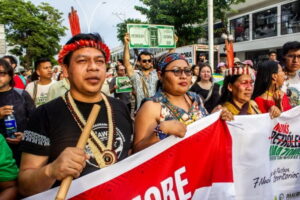 In April, nearly 60 countries gathered in Santa Marta, Colombia, for a landmark international conference focused on moving away from fossil fuels.
OCI worked alongside governments, civil society organizations, and frontline advocates to push for concrete national phaseout plans, international cooperation, and the finance needed to ensure a just transition.
Throughout the year, we carried that message into international climate diplomacy, including the lead-up to COP31: The world needs a full, fair, fast, and funded fossil fuel phaseout that puts people before polluters.
2. We exposed the oil companies fueling Israel’s genocide in Gaza
 Fossil fuels don’t just drive the climate crisis. They also fuel war, violence, and human rights abuses.
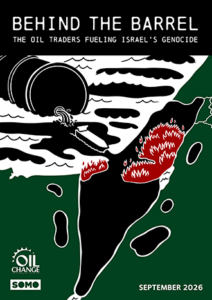
In September, with Centre for Research on Multinational Corporations (SOMO), we published Behind the Barrel: The Oil Traders Fueling Israel’s Genocide.
Using shipping data, it found that two secretive traders, Vitol and Heritage Petroleum FZCO, delivered 22 million barrels of crude oil to Israel between October 2023 and June 2026, about 11% of the country’s crude imports. Days later, we called on the UK government to investigate Vitol.
By tracing these supply chains, we provided journalists, campaigners, and human rights advocates with evidence to demand accountability from the countries and companies profiting from war.
3. We helped Texas communities force an investigation into LNG financing
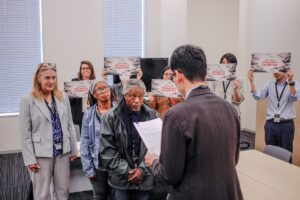
In one of the year’s most significant accountability developments, frontline communities in Texas took their fight against fossil fuel expansion all the way to Japan and secured an important response.
Working alongside community leaders and international partners, OCI supported complaints challenging the Japan Bank for International Cooperation’s financing of the Freeport LNG export terminal in Texas.
The facility suffered a major explosion in 2022, raising serious concerns about safety, environmental impacts, and the risks communities face from LNG infrastructure.
In September 2026, the bank announced it would investigate the complaints. The investigation is still underway.
This marked an important step toward holding international financiers accountable for the impacts of fossil fuel projects on communities thousands of miles away.
Read about the Freeport LNG investigation →
4. We documented a historic shift toward clean energy finance
There was some good news in 2026: Our research with Friends of the Earth U.S. found that international public finance for clean energy had overtaken fossil fuel finance for the first time in our tracked data.
Between 2023 and 2025, G20 governments and multilateral development banks provided an annual average of $52.7 billion for clean energy, compared with $36.3 billion for fossil fuels.
And there was more progress to celebrate. Our research with partners found that signatories to the Clean Energy Transition Partnership (CETP) had cut their international fossil fuel financing by up to 80% compared with levels before the agreement. That’s a major achievement for years of campaigning to end public funding for fossil fuels.
But the work is far from finished. Only 42% of the financing cut from fossil fuels by CETP countries has been redirected toward clean energy. And globally, just 2% of international public clean energy finance tracked in our research reached low-income countries.
These findings show that sustained campaigning can shift billions away from fossil fuels, but governments must go further and ensure that public money supports a just energy transition, especially in the Global South.
Explore our public finance findings →
5. We exposed how fossil fuel expansion drives up energy bills around the world
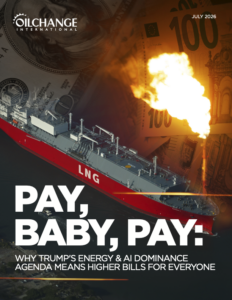 In 2026, OCI put the rising cost of fossil fuel dependence in the spotlight, exposing how U.S. gas exports and growing demand from data centers threaten to push energy bills even higher.
Our Pay, Baby, Pay research found that U.S. wholesale gas prices could average 80% higher between 2026 and 2040 than during the previous decade, as expanding LNG exports and domestic gas demand put upward pressure on prices.
We then took our findings global, publishing tailored analyses for Europe and Asia that exposed how Trump’s gas expansion agenda threatens energy affordability far beyond U.S. borders.
In Europe, we highlighted the high cost of U.S. LNG and the risks of deepening dependence on American gas. In Asia, we exposed how Japan’s support for U.S. LNG expansion could leave households and businesses across the region paying higher energy bills.
Together, our research connected the dots between fossil fuel expansion, corporate profits, and rising costs for families around the world, while making the case for affordable, renewable energy that protects people from volatile fossil fuel markets.
6. We exposed Big Oil’s windfall profits while people struggled
While households faced rising costs and communities suffered the consequences of conflict and climate disasters, fossil fuel corporations continued to rake in extraordinary profits.
OCI’s analysis found that five major international oil companies and five large U.S. independent refiners made more than $65 billion in profits in the second quarter of 2026.
We exposed how oil companies and refiners benefited from the Iran war and higher energy prices, while ordinary people bore the costs.
The fossil fuel industry’s profits come at an enormous cost to people and the planet, and governments must stop prioritizing corporate interests over public well-being.
Read our analysis of Big Oil profits →
7. We made the case for an Africa-led, just energy future
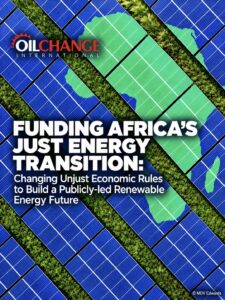 Africa has contributed the least to the climate crisis but faces some of its most devastating impacts. At the same time, wealthy countries and financial institutions continue to promote fossil fuel extraction as a path to economic development.
Our research showed how debt cancellation, fair taxation, and reforms to the international financial system could help unlock $367 billion in public finance a year for Africa’s just energy transition.
We worked to elevate solutions grounded in African priorities, including energy access, economic sovereignty, and public investment that benefits communities rather than multinational fossil fuel companies.
Explore our research on financing Africa’s just energy transition →
8. We exposed the companies and governments keeping Europe hooked on fossil gas
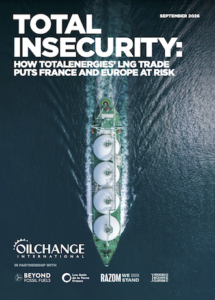 As European leaders talk about energy security, fossil fuel corporations expand their influence over the continent’s energy supply.
OCI’s Total Insecurity investigation revealed how TotalEnergies became a major player in Europe’s LNG imports, with 71% of its LNG imports to the EU and UK in 2025 coming from the United States and Russia.
Our research exposed how corporate fossil fuel interests deepen Europe’s dependence on volatile global gas markets, leaving households and businesses vulnerable to higher prices.
Alongside our research into the rising costs of U.S. LNG, we challenged the idea that building more gas infrastructure is the answer to Europe’s energy challenges.
9. We kept the pressure on world leaders to deliver a just fossil fuel phaseout
From international climate negotiations to national policy debates, OCI worked throughout 2026 to ensure that governments could not ignore the central cause of the climate crisis: fossil fuels.
Alongside partners and frontline communities, we challenged new oil and gas expansion, demanded an end to public finance for fossil fuels, and advocated for national phaseout plans backed by international cooperation and fair finance.
As world leaders gathered for COP31 in Türkiye, our message remained clear: Climate promises must translate into concrete action, and the countries and corporations most responsible for the crisis must pay their fair share.
To support more work like this in 2027, make a year-end donation today.